Safe recovery at home after surgery, hospitalization, or a health event.
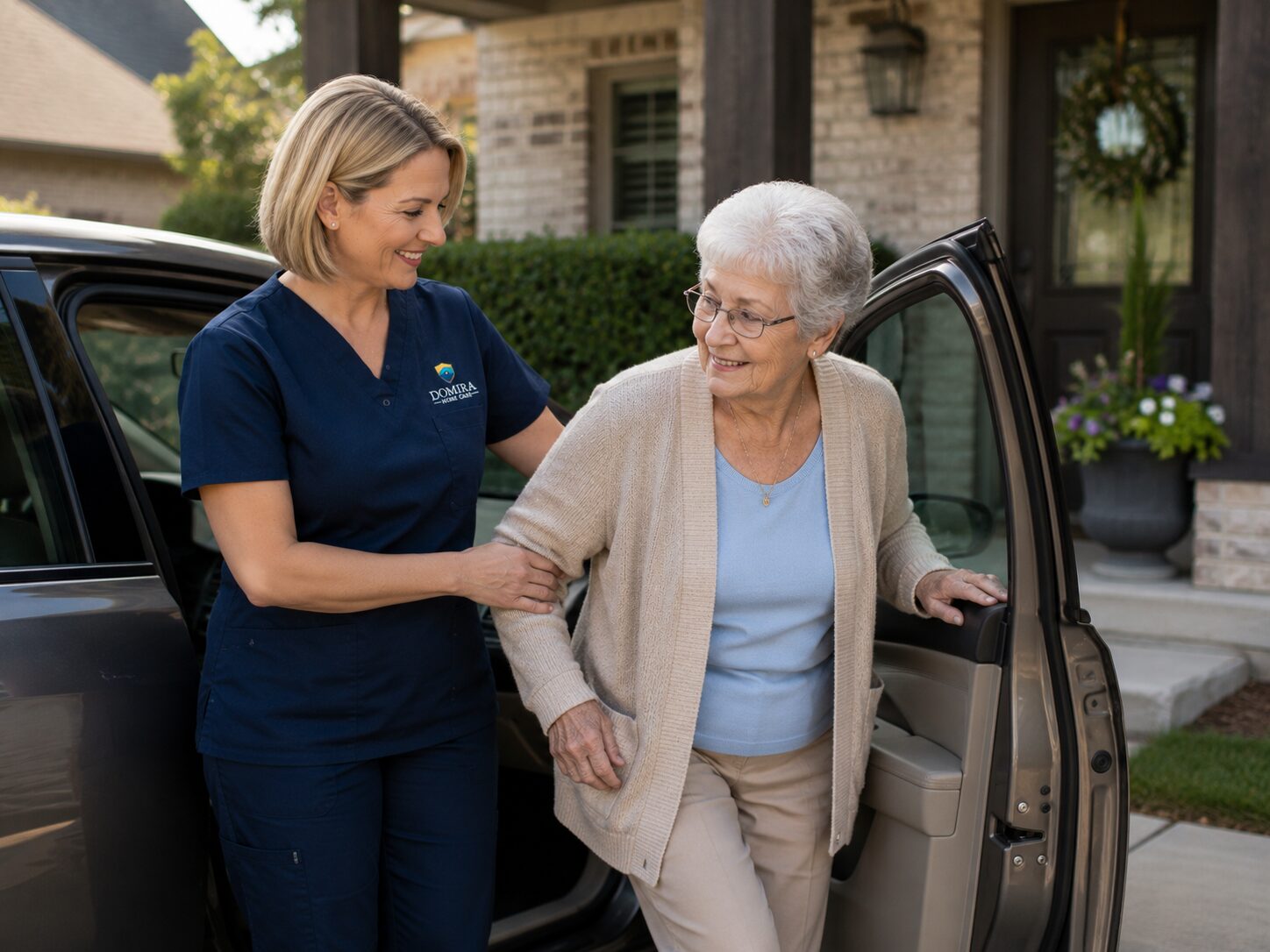
Coming home after surgery, a hospital stay, or a health event often comes with a long list of non-medical tasks that suddenly feel overwhelming. Cooking, bathing, getting around the house, keeping track of follow-up appointments. Most people manage these without thinking on a normal day, but during recovery they can become daily obstacles.
Recovery support from Domira Home Care fills the gap between hospital discharge and a return to normal routines. Our caregivers provide the daily, non-medical assistance that helps families focus on healing rather than logistics during the first days and weeks at home.
Recovery support helps with the non-medical tasks that often become difficult after surgery, hospitalization, or illness, including mobility support, meal preparation, medication reminders, transportation, light housekeeping, and communication with family.
Joint replacement surgery: Hip and knee replacements require weeks of limited mobility and careful movement. Our caregivers assist with transfers, support the at-home portion of physical therapy routines, and help families stick to the activity guidelines set by the medical team.
Cardiac events and procedures: After a heart attack, bypass surgery, or cardiac catheterization, patients often face activity restrictions and complex medication schedules. We help manage daily routines while the patient focuses on healing.
Stroke recovery: Stroke can affect mobility, speech, and cognition. Our caregivers provide daily living assistance, help with prescribed exercises, and adapt their approach as the patient regains function.
Cancer treatment: Chemotherapy and radiation cause fatigue, nausea, and weakened immune systems. Our caregivers handle household tasks, prepare meals, and provide companionship during treatment periods.
General hospitalization: Even a short hospital stay can leave an older adult weaker and more confused than before admission. A few weeks of recovery support helps bridge the gap back to independence.
It depends on the individual and the procedure. Some patients need help for just one to two weeks after a minor surgery. Others need several weeks or months of support after a major event. We do not require long-term commitments. You can start with a few hours per day and adjust up or down as recovery progresses.
Many families start recovery support before the patient comes home from the hospital so we can have a caregiver ready on discharge day. If you know a surgery or procedure is coming, contact us early so we can plan ahead.
Recovery support is time-sensitive in a way that other home care services are not. The first days after discharge are often when families want the most help in place. That means the caregiver assigned to a recovery case needs to be prepared from the very first visit, not learning the situation on the fly.
Before discharge, we review the hospital's care instructions, activity guidelines, medication list, and follow-up schedule. We build a recovery care plan that aligns with these instructions so our caregiver arrives knowing what kinds of support are needed, what medications are on the schedule, and what to keep an eye on according to the plan.
We also communicate directly with the family about what to expect during the first few days. Recovery is often harder than people anticipate. Pain, fatigue, frustration, and temporary loss of independence can take an emotional toll on both the patient and the family. Setting realistic expectations upfront helps everyone navigate the process with less stress.
During recovery, families want to know how things are going day to day. Our caregivers note how the day went, what got done, and anything worth flagging, and pass that information back to the family in regular updates. If they observe something they think the family should know about, they raise it promptly so the family can decide how they want to handle it.
This kind of steady communication helps families feel involved without being overwhelmed, especially when they are trying to balance work, kids, and their own lives during a relative's recovery.
Recovery support is designed to be temporary. As the patient regains strength and independence, the level of care decreases. We adjust the schedule gradually, reducing hours as the patient becomes more capable of managing on their own.
Some patients recover fully and no longer need any support. Others discover that a few hours of companion care or homemaking assistance per week improves their quality of life even after recovery is complete. We accommodate both outcomes. There is no pressure to continue services beyond what is needed, and no penalty for adjusting the schedule as circumstances change.
Recovery support works best when our caregivers are aligned with the patient's medical team. We are happy to review discharge instructions, follow prescribed activity restrictions, and communicate with home health providers, physical therapists, and physicians as needed.
If you or a loved one is facing a surgery or hospital discharge and you want support at home, call us at 972-600-2660 or schedule a free consultation. We can often have a caregiver in place within 24 to 48 hours.
Recovery support is usually time-bound but rarely predictable. The doctor might estimate two weeks of help, but real recovery often follows its own timeline depending on age, complications, and how well the home environment supports healing. We plan for that uncertainty from the start.
Most families start with a free phone consultation. There is no obligation and no pressure. We listen to what is going on, ask a few questions about the situation at home, and help you understand what level of support might actually fit. If we are not the right answer, we will say so and point you in a better direction.
When families decide to move forward, we build a care plan that reflects the specific situation. That means the routines, the preferences, and the small things that matter to the person receiving care. We then match a caregiver based on personality, schedule, and the kind of help needed, not just whoever is available. Matching is something we take time on, because the wrong fit makes everything harder.
Most recovery cases begin with daily hands-on support. That includes help with mobility, bathing, medication reminders, meal preparation, and the small tasks that matter when energy is limited. As strength returns, the schedule tapers naturally. We move from daily visits, to a few days a week, to as-needed support. For some families, recovery care evolves into ongoing personal or companion care because they realize the help has been valuable beyond the original recovery window. For others, it ends cleanly when the person is back to independent. Both paths are fine, and we plan with both in mind.
Communication is proactive. After meaningful shifts, families get a brief update on how things went, what was noted, and anything that should be flagged. You do not have to ask. The goal is for families to feel informed about what is happening at home without having to call us to find out.
Care plans are not static. Most families see needs shift over weeks and months, and we adjust the schedule, the services, and the caregiver team as things change. Domira’s owner stays personally involved in active cases. If something is not working, you do not need to navigate a corporate office or open a ticket. You call, and it gets handled.
Many families call us right after a hospital discharge, unsure whether the person being discharged actually needs help at home or whether the family can manage. The honest answer depends on the specific situation, and a short conversation usually clears it up quickly. If recovery overlaps with longer-term needs, personal care or extended hour care may be worth thinking about alongside the short-term recovery plan.
The fastest way to find clarity is a short conversation. You can call or text us at 972-600-2660, or schedule a free consultation at a time that works for you. We will listen to what is happening, share what we have seen work in similar situations, and help you think through next steps. If you are early in the process and just trying to understand options, that is fine too. We would rather help you figure out what you actually need than convince you to start something that does not fit yet.
Home health is medical care delivered by licensed clinicians such as nurses or therapists, typically covered by Medicare or insurance for a defined period after discharge. Recovery support is non-medical day-to-day help: mobility assistance, meal preparation, medication reminders, transportation to follow-up appointments, and a steady presence. Many families use both at the same time, with home health handling clinical follow-up and recovery support handling everything around it.
Often within 24 to 48 hours, sometimes the same day. We prioritize discharge cases because the first week home is when most setbacks happen. The assessment can be done by phone if needed, with the in-home visit shortly after.
Yes. We regularly work alongside home health agencies and welcome the coordination. Shared notes, consistent messaging, and an aligned routine make recovery smoother for the client and the family.
It varies. A simple recovery may need help for one to two weeks. A more complex recovery, such as after a stroke or major surgery, can extend for months. Many families transition recovery support into ongoing personal care once they see how much it helps.
Recovery support is available throughout the communities we serve. The same standards, the same matching process, and the same ongoing oversight regardless of which city you're in.