Hands-on daily living support delivered with comfort, safety, and preserved dignity.
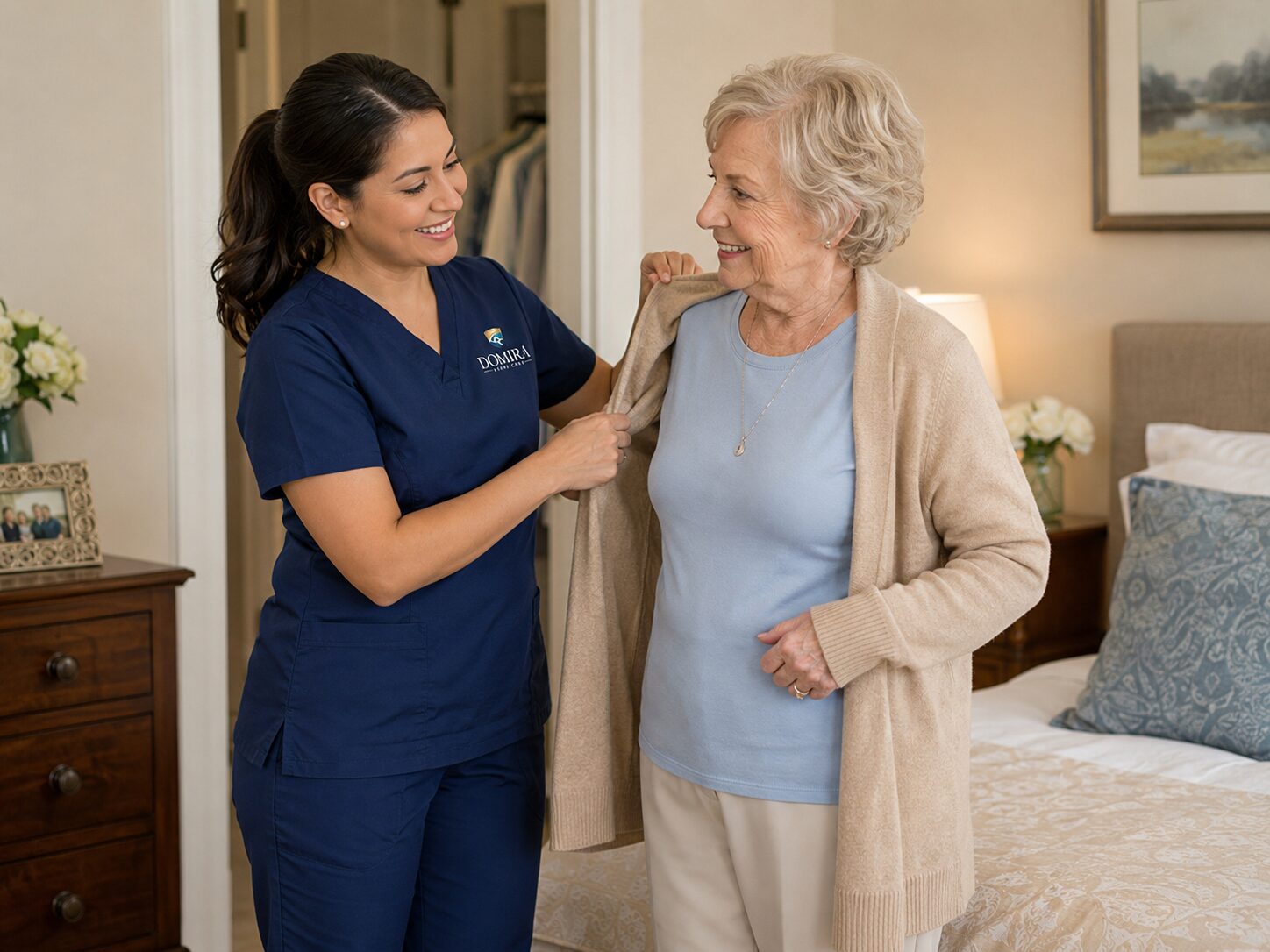
Personal care is hands-on help with the basic activities most of us take for granted. Bathing. Getting dressed. Using the bathroom. Moving from a bed to a chair. When aging, illness, or disability makes these tasks difficult or unsafe to do alone, a trained caregiver steps in to help while keeping the individual's dignity and independence intact.
This is different from medical care. Personal care does not require a doctor's order, and our caregivers are not nurses. They are trained professionals who specialize in the non-medical side of daily living, the tasks that medical providers don't cover but that make the difference between staying home and moving to a facility.
Most people do not want to move to a facility. They want to stay in their own home, sleep in their own bed, and maintain as much normalcy as possible. Personal care makes that possible.
For many families, personal care is what makes staying at home possible. The cost of personal care at home is often less than the cost of a facility, and many families prefer the comfort and familiarity of remaining in their own home.
For families, personal care also provides relief. When a spouse or adult child has been handling bathing, toileting, and transfers on their own, it takes a physical and emotional toll. Bringing in a professional caregiver is not giving up. It is getting help so the family can return to being family instead of being caregivers 24 hours a day.
There is no single profile. We provide personal care to:
If you are unsure whether personal care is the right fit, we are happy to talk through your situation. There is no obligation and no pressure. Call us at 972-600-2660 or schedule a free consultation.
Personal care is intimate work. The caregiver-client relationship matters more here than in any other service we offer. That is why we do not assign caregivers randomly.
Before care begins, we conduct a thorough assessment of the individual's needs, preferences, personality, and schedule. We then match them with a caregiver based on experience, temperament, and compatibility. If the match is not right, we reassign at no additional cost. The goal is for the client to feel comfortable and safe with the person helping them.
Personal care is often approached as a checklist, but we take a more thoughtful and individualized approach. Our founder comes from a healthcare operations background, not a staffing background, and that distinction shapes everything we do.
Before care begins, we conduct a comprehensive in-home assessment. We sit down with the family, walk through the home, identify safety risks, and build a detailed care plan that addresses not just the physical needs but the individual's routines, preferences, and personality. We want to understand how they like their coffee, what time they prefer to bathe, what makes them anxious, and what brings them comfort. These details matter because personal care is personal.
Our caregivers receive the full care plan before their first shift. They arrive prepared, not learning on the job. And because we limit the number of clients each caregiver is assigned to, they have the bandwidth to be fully present during every visit rather than rushing through tasks to get to the next appointment.
Every client's schedule is different, but a typical personal care visit might look like this:
The caregiver arrives and greets the client warmly. They start with a brief check-in: how was the night, any pain, any concerns. Then they assist with morning hygiene, bathing if scheduled, grooming, oral care, and dressing. They help the client to the kitchen or dining area, prepare breakfast according to dietary preferences, and sit with them while they eat. After breakfast, they tidy the bedroom, start laundry if needed, and assist with any prescribed exercises or mobility activities. Throughout the visit, the caregiver is observing: is the client's mood different today, is their appetite normal, are they moving differently, is there anything that should be communicated to the family.
Our approach is structured, attentive, and centered around the individual, not just tasks. Every visit is delivered by someone who knows the client and cares about their wellbeing.
One of the most common complaints families have about home care agencies is inconsistency. A different caregiver shows up every week, nobody knows the routine, and the family has to re-explain everything. At Domira, we assign a primary caregiver and a consistent backup. The client sees the same face every visit, and if the primary caregiver is unavailable, the backup is already familiar with the client and the care plan.
We also maintain open communication with families. You will hear from us proactively, not just when there is a problem. If our caregiver notices something during a visit that warrants attention, we communicate it the same day. Families should never have to wonder how things are going.
Every care plan is built around the individual, including the level of support, schedule, and overall goals. Because of that, pricing is developed based on each specific situation rather than a fixed published rate.
We'll review your needs, answer any questions, and provide a clear, personalized plan so you know exactly what to expect.
If you'd like to discuss your situation, call us at 972-600-2660 and we'll go through everything together.
Personal care is often the first kind of professional help a family considers, and the start tends to be the part families are most anxious about. The person receiving care may not want a stranger involved in something as intimate as bathing or dressing. We design the introduction with that in mind.
Most families start with a free phone consultation. There is no obligation and no pressure. We listen to what is going on, ask a few questions about the situation at home, and help you understand what level of support might actually fit. If we are not the right answer, we will say so and point you in a better direction.
When families decide to move forward, we build a care plan that reflects the specific situation. That means the routines, the preferences, and the small things that matter to the person receiving care. We then match a caregiver based on personality, schedule, and the kind of help needed, not just whoever is available. Matching is something we take time on, because the wrong fit makes everything harder.
The first visit is usually shorter than a typical shift. It is a chance to meet the caregiver, walk through the home, and ease into the routine without pressure. We start with the tasks the person is most comfortable accepting help with, and add the more personal ones (bathing, toileting assistance) once trust has built. We have found this matters. Rushing personal care from day one creates resistance that lasts for weeks.
Communication is proactive. After meaningful shifts, families get a brief update on how things went, what was noted, and anything that should be flagged. You do not have to ask. The goal is for families to feel informed about what is happening at home without having to call us to find out.
Care plans are not static. Most families see needs shift over weeks and months, and we adjust the schedule, the services, and the caregiver team as things change. Domira’s owner stays personally involved in active cases. If something is not working, you do not need to navigate a corporate office or open a ticket. You call, and it gets handled.
From there, the schedule grows or shrinks based on what is actually working. Some families start with three days a week and increase as the value becomes clear. Others start daily after a hospital event and taper back as recovery progresses. Personal care is rarely the same six months in as it was at the start, and we adjust deliberately rather than reactively.
If you are not sure whether your situation actually calls for personal care, versus companion care, homemaking, or simply more family involvement, that is exactly the kind of question we are good at helping you think through. The difference between services is often unclear from the outside, and the right answer depends on the specific person and home situation. For a lower-touch starting point, companion care and homemaking are often where families begin before personal care becomes the right next step.
The fastest way to find clarity is a short conversation. You can call or text us at 972-600-2660, or schedule a free consultation at a time that works for you. We will listen to what is happening, share what we have seen work in similar situations, and help you think through next steps. If you are early in the process and just trying to understand options, that is fine too. We would rather help you figure out what you actually need than convince you to start something that does not fit yet.
Personal care is non-medical. We help with daily living tasks such as bathing, dressing, mobility, and meal support. Skilled nursing or home health involves licensed medical professionals delivering treatments like wound care, IV therapy, or physical therapy. Many families use both at the same time, with personal care providing the daily presence and home health providing the medical component.
No. Our caregivers provide medication reminders, meaning they remind the individual to take their medication at the time and dosage specified by the prescribing provider. Actual administration of medication, including injections or anything that requires clinical judgment, is handled by a licensed nurse or family member.
Yes. Most clients start with a few hours per day and increase as needs grow. We build flexibility into every care plan so the schedule, services, and caregiver mix can adjust without starting over.
We assign a primary caregiver and a familiar backup who already knows the client and the care plan. The goal is continuity, so even on a backup day the routine feels the same.
Personal care is available throughout the communities we serve. The same standards, the same matching process, and the same ongoing oversight regardless of which city you're in.