A clean, organized, and safe home environment for comfort and wellbeing.
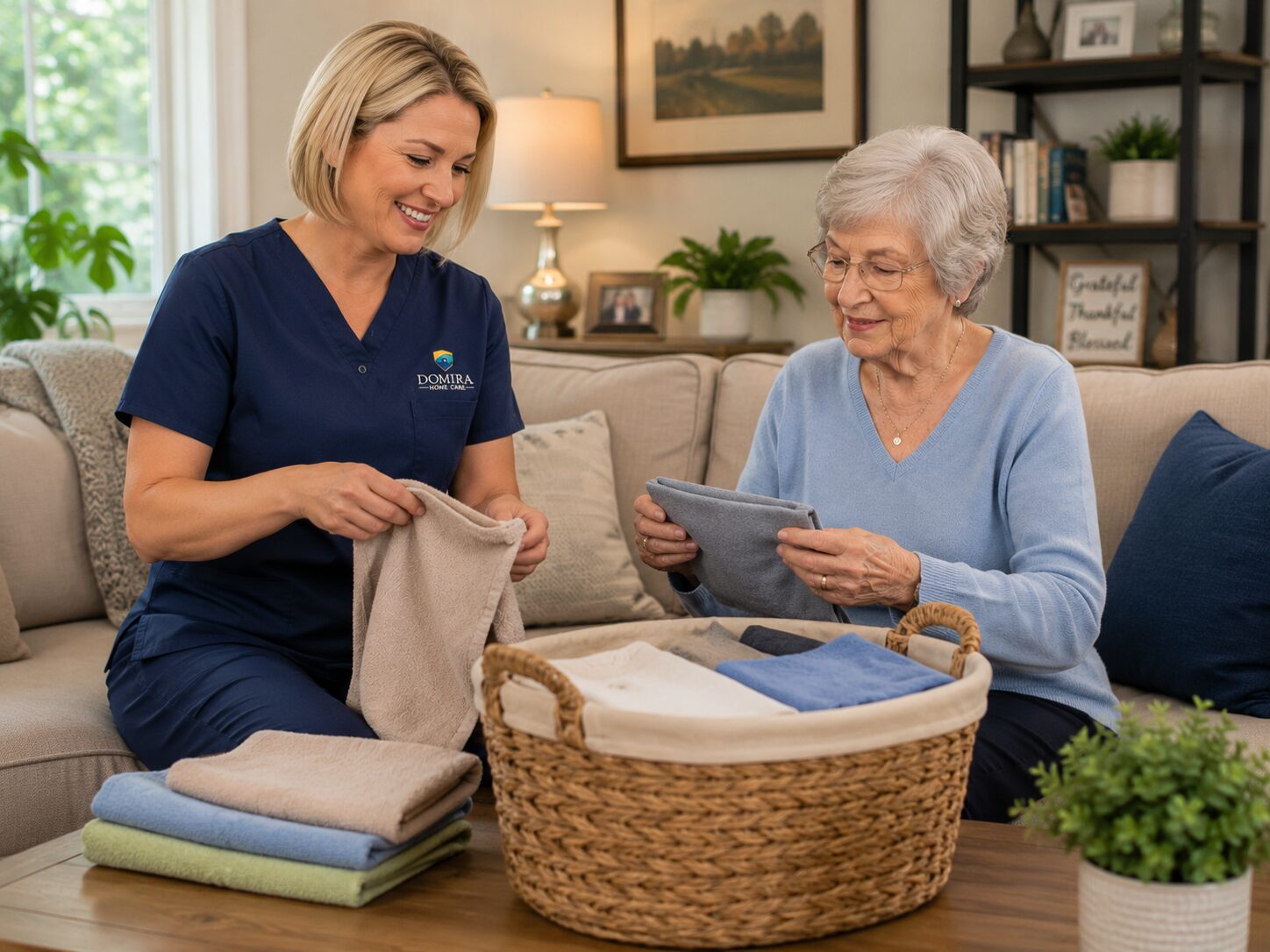
Homemaking services cover the household tasks that become difficult or unsafe when aging, illness, or disability limits a person's ability to manage their home. Cooking, cleaning, laundry, groceries. These are the things that keep a household running, and when they stop happening, health and safety decline quickly.
A dirty home is not just unpleasant. It is dangerous. Cluttered floors cause falls. Spoiled food leads to illness. Unwashed linens contribute to skin breakdown and infection. For older adults or individuals with limited mobility, these risks are serious and preventable.
Our homemaking services keep the home environment clean, organized, and safe so the individual can focus on what matters: their health, their comfort, and their independence.
The inability to maintain a household is one of the primary reasons families consider moving a loved one to assisted living. The logic seems simple: if they cannot cook and clean for themselves, they cannot live alone.
But that is not necessarily true. With homemaking support, many individuals can continue living at home safely for years longer than they could without it. The cost of a few hours of homemaking assistance per week is a fraction of the cost of a facility, and the quality of life is incomparable.
Homemaking is often provided alongside companion care or personal care. During a typical visit, a caregiver might prepare lunch, clean the kitchen, do a load of laundry, and spend time in conversation with the client. The services blend together naturally because they are all part of the same goal: helping someone live well at home.
If you are not sure what combination of services your family needs, we will help you figure it out during a free consultation. Call us at 972-600-2660 or get started here.
Homemaking is one of those services that can feel transactional from the outside. A caregiver shows up, cleans, does laundry, leaves. We try to make it more than that. The caregivers who do homemaking work for Domira also engage with the client, notice changes, and treat the visit as more than a chore list.
That matters because homemaking is often the first sign of trouble. A family member notices a pile of unopened mail, or food in the fridge that has gone bad, or laundry that has not been touched in weeks. Those are practical problems on the surface, but they are also signals that something else might be going on. A caregiver who is in the home consistently is in a position to notice these patterns and flag them gently, which gives the family time to plan rather than react.
We also approach homemaking with respect for the home itself. The client has lived there a long time. They have ways things should be done. Our caregivers learn those preferences rather than imposing a standardized approach. The goal is for the home to feel like the client’s home, kept up properly, not a space that has been reorganized by someone else.
Homemaking is often added gradually rather than all at once. A family might start with weekly help focused on the tasks that have become hardest, and expand from there as the value becomes obvious. Common starting points are laundry, deep cleaning, and grocery runs.
Most families start with a free phone consultation. There is no obligation and no pressure. We listen to what is going on, ask a few questions about the situation at home, and help you understand what level of support might actually fit. If we are not the right answer, we will say so and point you in a better direction.
When families decide to move forward, we build a care plan that reflects the specific situation. That means the routines, the preferences, and the small things that matter to the person receiving care. We then match a caregiver based on personality, schedule, and the kind of help needed, not just whoever is available. Matching is something we take time on, because the wrong fit makes everything harder.
Our approach is to listen to what is genuinely difficult and start there. For some clients that is anything involving lifting or bending. For others it is the cognitive load of meal planning and grocery shopping. For others it is the energy required to keep up with daily tidying. We do not bring a standardized checklist. We build the support around the actual home and the actual person.
Communication is proactive. After meaningful shifts, families get a brief update on how things went, what was noted, and anything that should be flagged. You do not have to ask. The goal is for families to feel informed about what is happening at home without having to call us to find out.
Care plans are not static. Most families see needs shift over weeks and months, and we adjust the schedule, the services, and the caregiver team as things change. Domira’s owner stays personally involved in active cases. If something is not working, you do not need to navigate a corporate office or open a ticket. You call, and it gets handled.
If the home is starting to feel harder to manage but you are not sure whether the issue calls for homemaking help, personal care, or something else entirely, that uncertainty is something we can help you sort out. Often the answer is a combination, and the right starting point depends on the specifics. Homemaking pairs naturally with companion care or personal care, and many families end up combining services as needs grow.
The fastest way to find clarity is a short conversation. You can call or text us at 972-600-2660, or schedule a free consultation at a time that works for you. We will listen to what is happening, share what we have seen work in similar situations, and help you think through next steps. If you are early in the process and just trying to understand options, that is fine too. We would rather help you figure out what you actually need than convince you to start something that does not fit yet.
Light housekeeping, laundry, meal planning and preparation, grocery shopping, errands, and kitchen cleanup. The focus is on keeping the home comfortable and the daily routine running smoothly. We don't do heavy cleaning, deep yardwork, or anything that requires specialized equipment.
Yes. We adapt to whatever the client follows, whether that's lower sodium, softer textures, smaller portions, or family recipes. We don't design therapeutic medical diets, but we work within the guidance the client and family provide.
Yes. The caregiver can shop from a list provided by the family, take the client along if they'd like to come, or coordinate delivery. We provide receipts for every trip.
Yes, and it usually is. Most visits naturally blend conversation, light household help, and meal support. The care plan reflects what the visit actually needs to cover, not rigid service categories.
Homemaking is available throughout the communities we serve. The same standards, the same matching process, and the same ongoing oversight regardless of which city you're in.