
What Does an In-Home Caregiver Do?
An in-home caregiver supports the daily tasks that help a person remain safe, comfortable, and independent at home. The exact job can include personal care, meals, mobility, homemaking, transportation, companionship, reminders, and attentive observation.
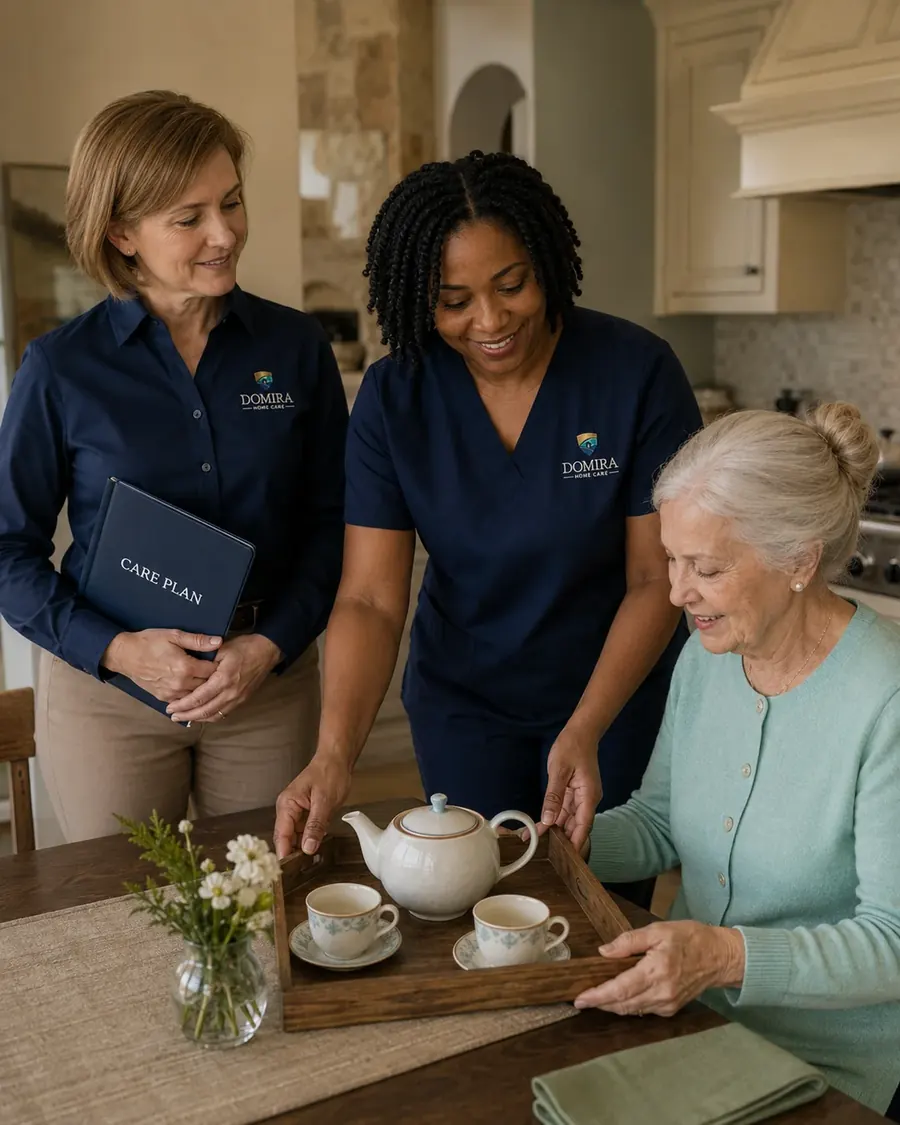
An in-home caregiver helps with the parts of everyday life a person can no longer manage safely, reliably, or comfortably alone.
The role usually combines activities of daily living, instrumental activities of daily living, companionship, supervision, and practical household support.
Texas Health and Human Services describes personal assistance services as help with activities of daily living such as bathing, dressing, grooming, eating, transferring, and toileting, as well as instrumental activities of daily living such as meal preparation, house cleaning, shopping, and other tasks that support independent living.
That framework is useful because it explains why the same caregiver may help with a shower in the morning, prepare lunch, do a load of laundry, drive to an appointment, provide a medication reminder, and spend time talking with the client later in the visit.
What an in-home caregiver can do
Bathing, dressing, grooming, and toileting
Hands-on personal care can include bathing or showering assistance, dressing, oral care, grooming, toileting routines, and continence support.
Mobility and transfers
Support with walking, positioning, getting in and out of chairs or bed, and following the mobility approach in the care plan.
Meals and hydration
Meal planning, preparation, feeding assistance when appropriate to the plan, hydration reminders, grocery support, and kitchen cleanup.
Medication reminders
Caregivers can provide reminders and support the established routine. Medication administration or clinical medication management is a different responsibility and may require licensed or properly delegated care.
Companionship and supervision
Conversation, activities, reassurance, routine accompaniment, cueing, and an attentive presence for people who benefit from regular support.
Homemaking
Laundry, dishes, light housekeeping, linens, errands, groceries, and routine household organization when these tasks are part of the care plan.
Transportation and appointments
Driving or accompanying the client to appointments, errands, activities, worship, or family visits when transportation is arranged within the service plan.
Observation and communication
Caregivers do not diagnose, but they can notice meaningful changes in routine, mobility, appetite, mood, skin, cognition, or function and report them through the agency's communication process.
Daily-living support and clinical care are different roles.
Supports daily life
Personal care, meals, mobility, companionship, supervision, transportation, light housekeeping, errands, reminders, and routine support belong here.
Treats medical needs
Skilled nursing, therapy, wound care, injections, clinical assessment, and other ordered medical services require the appropriate licensed professional or properly delegated arrangement under applicable rules.
A caregiver visit usually blends tasks rather than staying inside one service category.
Help with getting out of bed, toileting, bathing, dressing, grooming, breakfast, hydration, and medication reminders.
Lunch preparation, dishes, laundry, a walk, errands, grocery shopping, an appointment, or companionship during the quieter part of the day.
Dinner, light housekeeping, toileting, changing clothes, preparing the bedroom, reminders, and settling into a familiar bedtime routine.
Awake overnight care may include bathroom assistance, mobility, personal care, reassurance, reminders, and supervision according to the plan.
A clear care plan protects the client, caregiver, and family.
Confusion often starts when families assume a caregiver is responsible for anything that happens in the home.
Before care begins, clarify medication boundaries, transportation, lifting and transfers, household tasks, pets, money handling, gifts, errands, clinical tasks, documentation, and who should be contacted when something changes.
Heavy cleaning, major home repairs, legal or financial management, and independent clinical decision-making are not routine caregiver responsibilities. If a task requires a nurse, therapist, physician, tradesperson, financial professional, or another specialist, the care plan should reflect that boundary rather than asking the caregiver to operate outside the role.
How the caregiver is managed can matter as much as the task list.
A caregiver can be skilled and kind, but the care arrangement still needs scheduling, backup, communication, supervision, and a process for changing the plan.
Matching
Experience, personality, pace, communication style, household fit, schedule, and the client's comfort all affect whether the assignment works.
Continuity
Familiar caregivers learn routines and preferences over time, which can reduce repeated explanations and make care feel less disruptive.
Follow-up
Early check-ins help identify mismatch, unclear expectations, or schedule problems before they become larger issues.
Family communication
A defined communication process gives families a way to understand meaningful changes without expecting the caregiver to manage the entire care system alone.
Questions families often ask
What does an in-home caregiver do?
An in-home caregiver helps with daily-living tasks such as bathing, dressing, grooming, toileting, mobility, meals, medication reminders, companionship, transportation, errands, laundry, light housekeeping, and other routines included in the care plan.
What is the difference between a caregiver and a home health nurse?
A non-medical caregiver supports daily living, safety, routine, and independence. A home health nurse provides skilled clinical services such as nursing assessment, wound care, injections, and other medical treatment when ordered and covered under the appropriate plan of care.
Can a caregiver give medications?
Routine non-medical home care commonly includes medication reminders. Medication administration or other clinical medication tasks may require a licensed professional or a properly delegated arrangement under applicable Texas rules and agency policy.
Can a caregiver do housekeeping?
Yes, light housekeeping is commonly part of non-medical home care when it supports the client's routine. Heavy cleaning, major home projects, repairs, and specialty cleaning are separate services.
Can a caregiver take someone to appointments or run errands?
Transportation and errands can be part of the care plan when the provider's transportation requirements are met. Families should clarify vehicle use, mobility needs, mileage or expenses, and how appointments are coordinated.
How do we decide which caregiver duties belong in the care plan?
Start with the tasks the person cannot manage safely or reliably, the times of day those needs occur, the support family will continue providing, and the person's preferences. A home care assessment can organize those needs into a practical schedule and caregiver role.
Sources and scope
Texas Health and Human Services: Personal Assistance Services, ADLs and IADLs
Texas Health and Human Services: Primary Home Care and Allowable Tasks
Medicare: Home Health Services Coverage
This guide is general education about non-medical in-home caregiving. Exact caregiver scope depends on the provider, care plan, applicable rules, and whether a task requires licensed or delegated clinical care.
Continue the planning conversation
Need help turning a long list of concerns into a clear caregiver role?
Domira starts with the actual routines, risks, preferences, and family responsibilities, then builds the caregiver assignment around what the person truly needs.
Schedule a Free Consultation