
More Than a Ride: Help With Appointments & Outings
Getting there may be only one part of the problem. A caregiver can help an older adult prepare, stay with them through an appointment or outing, and help them settle back home.
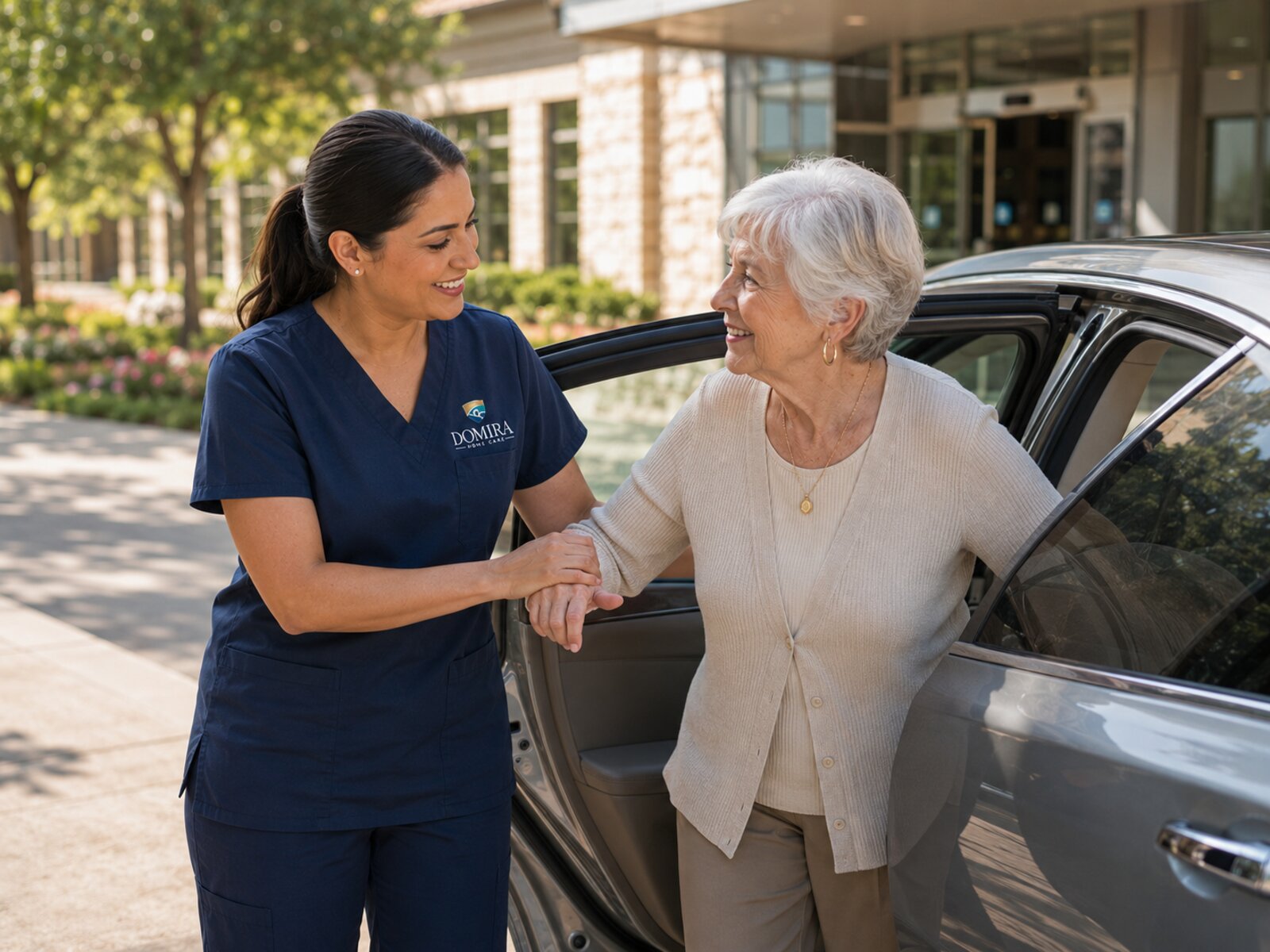
Who helps once the car arrives?
Your parent may have a ride but still need help getting ready, finding the right office, carrying paperwork or managing a long wait. An adult child may be able to arrange the trip but not leave work to stay through the visit.
Appointment accompaniment addresses those practical gaps. It can also support everyday outings such as worship, a family meal, shopping or a favorite community activity. The goal is to keep worthwhile parts of life accessible, with the right person alongside.
What the caregiver can help with
The specific tasks are agreed in the care plan, based on the person and the outing.
Prepare at home
Help with dressing and the departure routine, gather the agreed paperwork and mobility aids, and allow enough time so leaving is not rushed.
Travel and arrive
Follow the arranged transportation plan, provide agreed mobility assistance, find the destination and help with practical check-in steps.
Stay through the visit
Provide company while waiting and help the client keep track of their questions. With permission, accompany them into the appointment or wait nearby.
Keep the client involved
Let the person speak for themselves and choose the help they want. A caregiver supports the visit rather than taking over decisions.
Return and settle in
Help the person get comfortably home, put belongings away and resume the agreed routine. The appointment is not necessarily the end of the support needed.
Share the agreed update
Let the authorized family contact know how the outing went and pass along practical information or written instructions through the agreed communication process.
A little preparation makes the plan clearer.
The National Institute on Aging recommends prioritizing questions, bringing relevant information and telling an accompanying person how they can help. The client should still have room to speak privately with the clinician.
For Domira, we also clarify the address, arrival time, likely duration, walking or transfer assistance, vehicle arrangement, expenses and family contact. If the visit may run late, we plan how a schedule change will be handled.
For a procedure involving sedation or special discharge instructions, confirm the facility's escort and aftercare requirements with Domira before booking. Routine accompaniment should not be assumed to meet every procedure's requirements.
The outing can feel less like another task to manage.
For someone living with memory changes, a familiar person can offer reassurance, remind them where they are going and keep the pace comfortable. An older adult without memory difficulties may simply appreciate company and practical help.
Consistency matters here just as it does at home. The caregiver can learn how much assistance the person wants, the routines they prefer and when they need a break.
Accompaniment is care, not simply transportation.
Domira provides non-medical support. Caregivers do not interpret test results, change medications or make treatment decisions. Questions about instructions are directed to the treating team.
We review mobility and vehicle needs before the outing. A wheelchair-accessible vehicle or specialized medical transport may require a separate provider. Domira does not assume that a standard vehicle or an unplanned transfer is suitable.
Care visits have a four-hour minimum and generally fit within a recurring support plan. Preparation, waiting and help afterward should be included when discussing the schedule, not treated as incidental to the drive.
Questions about appointments and outings
How is appointment accompaniment different from a ride?
A ride gets someone between locations. Accompaniment adds a person who can help with preparation, getting around, waiting and returning home. The transportation arrangement and the caregiver's role are planned together.
Can a Domira caregiver drive my parent to an appointment?
Yes, transportation can be included when the assignment meets Domira's transportation requirements. Before care begins, we clarify the vehicle, mobility assistance, timing and mileage or other expenses.
Can the caregiver stay during the appointment?
Yes, that can be part of the plan. The client decides how they want the caregiver involved, and the medical office's requirements apply. With permission, the caregiver can provide company, help organize questions and record instructions for follow-up.
Will the family receive an update afterward?
We agree in advance who may receive information and what updates are useful. That can include the visit's completion, practical observations and the clinician's written instructions. Medical questions go back to the treating clinician.
Can accompaniment help someone living with dementia?
Yes. A familiar caregiver can provide reassurance, reminders and help navigating the outing. We plan the timing and pace around the person. See our dementia caregiver guide for everyday support ideas.
Is this medical or wheelchair transportation?
No. Domira provides non-medical caregiver support, not ambulance, stretcher or specialized medical transport. If an accessible vehicle or transport provider is needed, we discuss that requirement rather than assume a standard car will work.
Can we book only the time spent driving?
Domira is a home care service, not a ride-only service. Visits have a four-hour minimum and are generally part of recurring support. We plan preparation, travel, waiting and help afterward within the agreed visit. See Planning a Home Care Schedule.
Can the caregiver accompany someone who lives in assisted living?
Yes. Domira can arrange one-on-one support in assisted living or memory care, including outings, while coordinating with the resident, family and community.
Sources and scope
National Institute on Aging: How To Prepare for a Doctor's Appointment
National Institute on Aging: Services for Older Adults Living at Home
This guide describes planned non-medical accompaniment. Vehicle arrangements, assistance and communication are confirmed before care begins.
Continue the planning conversation
Would a dependable companion make appointments easier?
Tell Domira what your loved one needs before, during and after an outing. We can work through the care and transportation details with you and explain the proposed schedule.