
What Happens During a Home Care Assessment?
A home care assessment turns a broad concern such as “Dad needs more help” into a specific plan for daily routines, personal care, mobility, household support, caregiver fit, communication, and schedule.
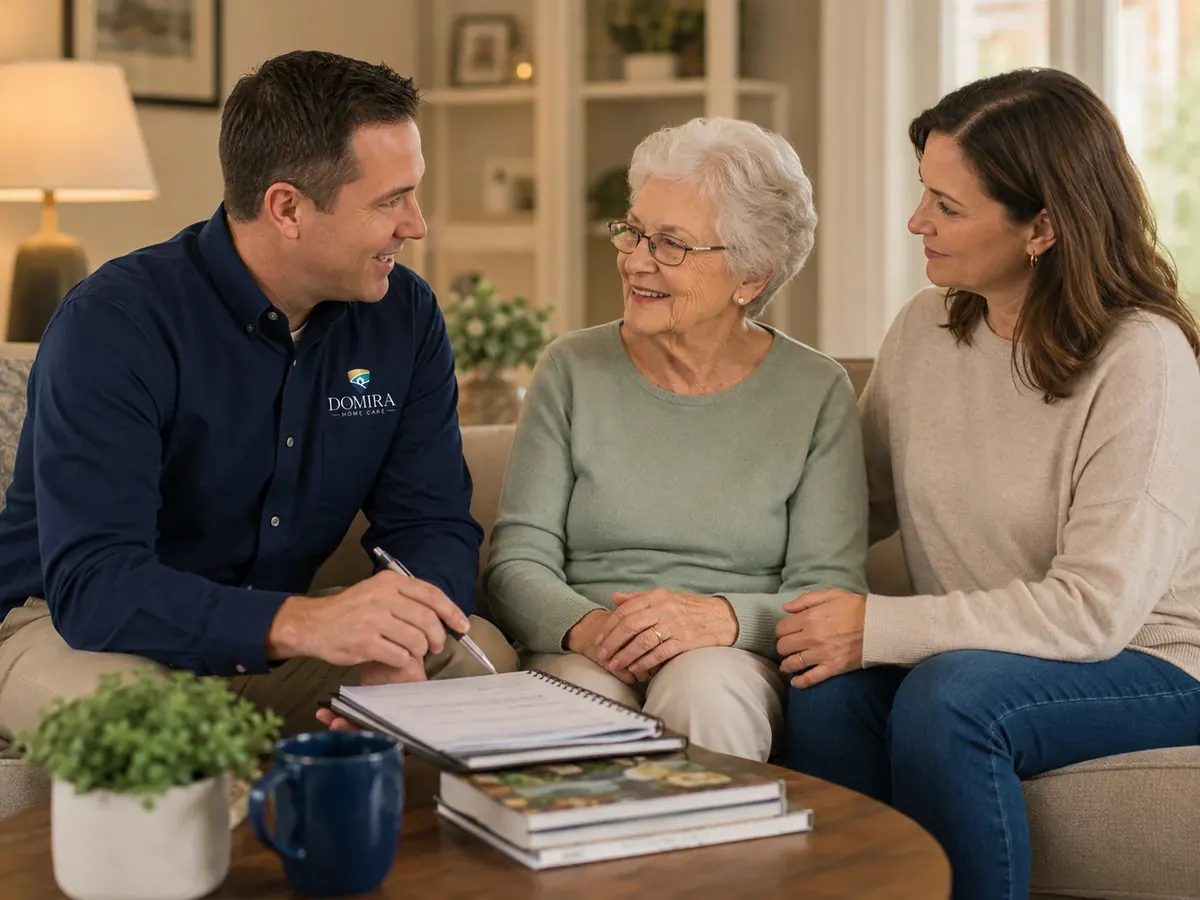
What an In-Home Care Assessment Is
The purpose is to understand what daily life actually looks like before assigning a caregiver or recommending a schedule.
An in-home assessment lets the provider see the physical environment, how the person moves through the home, which routines are working, where support is needed, and what family members are already doing.
For non-medical home care, the assessment is not a substitute for a medical examination or diagnosis. Health concerns that require clinical evaluation should be referred to the appropriate physician, nurse, therapist, or other clinician.
What a home care provider should understand before building the plan
The exact form varies by agency, but a useful assessment covers both tasks and the person behind the tasks.
Personal care
Bathing, dressing, grooming, toileting, continence routines, and how much hands-on help or cueing is needed.
Mobility and transfers
Walking, stairs, getting in and out of bed or chairs, assistive devices, transfer techniques, and fall-related concerns.
Meals and hydration
Shopping, food preferences, meal preparation, eating, hydration routines, and who is responsible for groceries or special instructions.
Cognition and supervision
Memory, cueing, orientation, wandering or exit-seeking concerns, communication, routines, and the level of supervision needed within home-care scope.
Household routines
Laundry, light housekeeping, linens, errands, pets, mail, organization, and the tasks the person wants to continue doing independently.
Medication reminders
The reminder routine, where medications are organized, and the boundary between reminders and medication administration or clinical management.
Transportation
Appointments, errands, activities, vehicle arrangements, mobility needs, and whether the caregiver will drive or accompany the client.
Family and other providers
Who is involved, what family wants to keep doing, home health or hospice involvement, communication permissions, and how responsibilities are divided.
Caregiver matching begins with information the assessment uncovers.
Two people can need the same task assistance and still need very different caregivers.
Can the caregiver perform the assignment?
Relevant experience, mobility or personal-care competency, dementia experience, transportation requirements, schedule, and other practical factors matter.
Can the caregiver work well with this person?
Communication style, pace, personality, interests, household preferences, cultural or language considerations, and how the client wants help delivered also matter.
Include the people who know the routine and the person whose routine it is.
The assessment should not become a family meeting that talks around the older adult.
Include the client as directly as possible so preferences, priorities, and concerns are heard firsthand.
A family member can describe changes, clarify the current support system, and explain what the family can realistically continue doing.
A spouse, adult child, power-of-attorney holder, or other authorized person may need to participate when decisions or communication responsibilities are shared.
Relevant discharge instructions or authorized care information can be reviewed separately. The home-care assessment should remain within the agency's scope.
Bring the information that explains a normal day.
Families do not need a polished binder. A few practical details make the assessment much more useful.
- Write down the morning, afternoon, evening, and overnight routines that are hardest.
- List recent changes the family has observed and whether a clinician has evaluated them.
- Have the current medication list available for context, while remembering that non-medical caregivers provide reminders rather than medication administration.
- Note mobility devices, transfer methods, transportation needs, and home-access issues.
- Identify the family members and professionals already involved.
- Bring long-term care insurance or other benefit information if payment documentation may matter.
- Think about caregiver personality, communication, language, interests, pets, smoking, household, or other fit considerations.
- Prepare questions about rates, schedules, continuity, call-outs, communication, cancellation, holidays, overtime, transportation, and changes to the plan.
The output should be a clear plan, not simply a completed form.
A useful assessment gives the family enough information to understand what care would actually look like.
The provider should be able to summarize the recommended support, care tasks, schedule considerations, caregiver experience and matching priorities, family communication, safety or escalation instructions within scope, and the rate or written estimate.
The care plan should then guide caregiver orientation and the first visits. Early follow-up matters because the assessment is a starting point. The plan should be adjusted when the client, family, caregiver, or other providers identify a meaningful change.
A home care assessment does not diagnose a health condition.
Home care providers can observe function and daily needs, but diagnosis and treatment belong with licensed clinical professionals acting within their scope.
If the assessment reveals new confusion, weakness, pain, skin problems, significant weight or appetite changes, shortness of breath, falls, or another health concern, the family should involve the appropriate clinician. Home care can then support daily routines alongside the medical plan when appropriate.
Home care assessment questions
What is a home care assessment?
It is a structured review of daily routines, personal-care needs, mobility, meals, cognition or supervision needs within home-care scope, household tasks, transportation, family involvement, preferences, home environment, and schedule so a practical care plan can be developed.
Does a home care assessment happen in the home?
An in-home visit is especially useful because the provider can see the actual environment, routines, mobility paths, and household context. Some initial screening can happen by phone, but the home visit provides information that is difficult to capture remotely.
Is a home care assessment a medical exam?
No. A non-medical home care assessment is for care planning and daily function, not diagnosis or medical treatment. New or significant health concerns should be evaluated by an appropriate clinician.
Who should be present for the assessment?
The person receiving care should be involved as directly as possible. A primary family contact or other authorized decision-maker can also attend to explain observations, current support, communication needs, and family responsibilities.
What should I have ready for an assessment?
Prepare notes about daily routines, recent changes, mobility, meals, personal care, cognition, transportation, household tasks, family involvement, current services, medication list for context, insurance information if relevant, and questions about schedule, rate, continuity, and communication.
Will the assessment tell us how many hours of care we need?
It should help define the tasks, times of day, supervision needs, family involvement, and schedule considerations that shape a care plan. The recommended schedule should come from the person's actual needs rather than a generic hours formula.
What happens after the assessment?
The provider should translate the findings into a care plan, caregiver requirements, schedule, communication process, and written rate or estimate. Caregiver matching and early follow-up then help determine whether the plan is working in practice.
Does Domira charge for the initial in-home consultation?
Domira offers a free in-home consultation with Nick Julian, Domira's nurse-founder and administrator. The visit is used to understand the situation, explain options, and determine whether Domira is a fit before care begins.
Sources and scope
National Institute on Aging: Services for Older Adults Living at Home
National Institute on Aging: Does an Older Adult in Your Life Need Help?
Assessment practices differ by provider. This guide describes the information a thorough non-medical home-care assessment should clarify and does not replace medical evaluation.
Continue the planning conversation
Want to make the care need specific before deciding what to do?
Nick Julian, Domira's nurse-founder and administrator, conducts the free in-home consultation so the first care plan begins with the person, the family, and the actual home routine.
Schedule a Free Consultation