
Home Care vs Home Health Care: What's the Difference?
Home care and home health happen in the same place, but they solve different problems. One supports daily living. The other provides skilled health services under clinical eligibility rules.
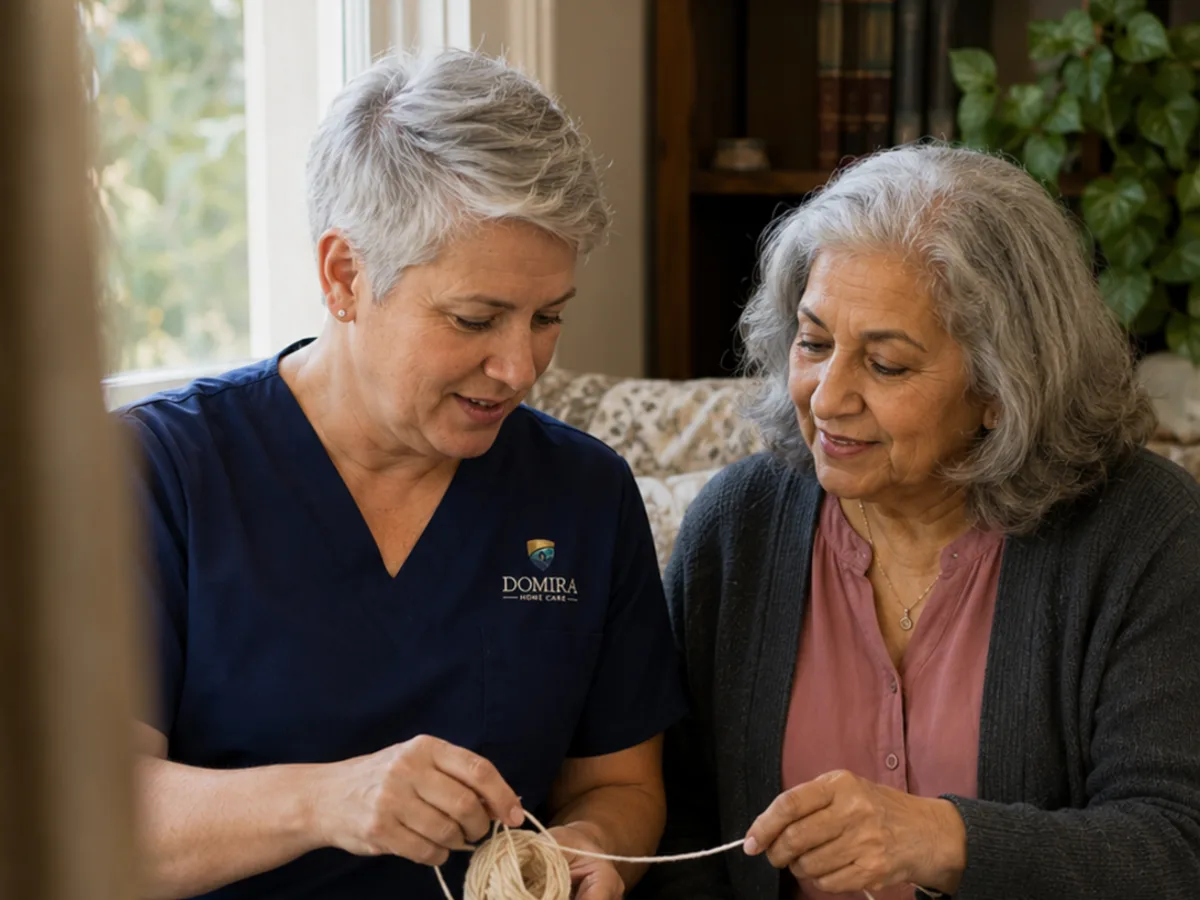
Think daily-living support versus skilled health care.
The distinction is about the service being delivered, not whether it happens in the home.
Home care helps a person manage daily routines and remain supported at home. It is commonly arranged privately by the person or family.
Home health care provides skilled services such as nursing or therapy when medical eligibility requirements are met. Medicare and other health coverage may apply under specific rules.
Some organizations offer both kinds of services, while others provide only one. Ask what service line is actually being recommended rather than relying on the company name.
Home care and home health answer different needs.
Neither category is automatically more appropriate. The person's actual needs determine whether one, the other, or both are useful.
| Question | Home care | Home health care |
|---|---|---|
| Primary purpose | Help with daily living, routines, independence, supervision, and practical support. | Skilled treatment, monitoring, or therapy tied to a medical need. |
| Typical providers | Caregivers or personal care attendants, depending on the service and state rules. | Registered nurses, therapists, and other licensed clinical professionals. |
| Examples | Bathing, dressing, mobility, meals, light housekeeping, companionship, errands, transportation, medication reminders. | Skilled nursing, wound care, physical therapy, occupational therapy, speech-language pathology, and other covered skilled services. |
| How it starts | The person or family can contact a home care provider directly. | Usually requires an order or certification and must meet payer or clinical eligibility requirements. |
| Payment | Often private pay or long-term care insurance; other benefits may apply. | Medicare, Medicaid, or health insurance may cover qualifying services under plan rules. |
| Duration | Can continue or change as daily support needs change. | Can be short or ongoing when clinical eligibility remains met, depending on payer and medical need. |
Medicare home health is not a general caregiver benefit.
Medicare covers qualifying home health under specific rules. It does not pay for unlimited daily-living support simply because a person needs help at home.
Skilled need + home-health eligibility
Medicare can cover part-time or intermittent skilled nursing and certain therapy services for eligible homebound patients. Limited aide services can be covered when skilled services are also being received.
Standalone ongoing custodial care
Medicare does not cover 24-hour-at-home care, meal delivery, homemaker services unrelated to the care plan, or personal/custodial care when that is the only care needed.
Home health visits and home care shifts can complement each other.
The two services can be coordinated around the same person while maintaining clear roles. If the non-medical side is still unclear, see what an in-home caregiver does day to day. Families receiving hospice can also see how hospice and private home care work together at home.
After a hospitalization
A home health nurse or therapist may address skilled recovery needs while a caregiver helps with bathing, dressing, meals, mobility routines, and household tasks.
During therapy
Therapists set and deliver skilled treatment. A home care caregiver can help the person manage ordinary daily routines between visits without providing therapy treatment.
With medication routines
A nurse may provide skilled medication services when ordered. A home care caregiver can provide reminders according to the non-medical care plan but does not administer medications for Domira.
With family coordination
Families can keep the skilled provider and home care agency informed about schedule changes and important observations, with appropriate authorization and role boundaries.
Start with the problem you are trying to solve.
If the need is unclear, list the tasks or concerns before deciding which type of provider to contact.
- Bathing, dressing, meals, mobility assistance, companionship, transportation, homemaking, or supervision point toward home care.
- Wound treatment, injections, skilled nursing assessment, or prescribed therapy point toward home health or another clinical provider.
- Needs in both categories may justify both services at the same time.
- New or worsening medical symptoms should be evaluated by the appropriate health professional rather than treated as a home-care question.
- Ask each provider to explain its exact scope so the family knows who is responsible for what.
Clear roles make combined care easier for families.
When both services are involved, coordination should not blur the difference between clinical treatment and daily-living support.
Keep a current list of providers, schedules, emergency contacts, and care-plan priorities. Share information only with appropriate authorization. If a home care caregiver observes a meaningful change, the agency can follow its change-of-condition process and notify the appropriate family or care-team contact within its role.
Domira provides private-pay home care. Medicare-covered skilled home health is a separate service. When both are needed, the two can work alongside each other.
Home care and home health questions
Is home care the same as home health care?
No. Home care generally supports daily living, personal care, homemaking, companionship, supervision, and routines. Home health provides skilled clinical services such as nursing or qualifying therapy under a medical plan of care.
Does Medicare pay for home care?
Medicare can cover qualifying skilled home health services and, in certain cases, limited home health aide services when its requirements are met. Ongoing non-medical personal care, homemaking, supervision, and longer caregiver schedules are typically arranged separately. If both are needed, Domira can work alongside the Medicare-certified home health provider and help the family understand which needs fit each service. See How to Pay for Home Care.
Can someone receive home care and home health at the same time?
Yes. A person may receive skilled nursing or therapy visits through home health while also receiving private-pay home care for bathing, dressing, meals, mobility routines, homemaking, companionship, or other daily support.
Does home care require a doctor's order?
Private-pay home care generally can be arranged directly by the person or family. Skilled home health is tied to clinical eligibility and payer requirements and commonly requires an order or certification from an allowed practitioner.
Can a home care caregiver do physical therapy exercises?
A Domira caregiver does not provide physical therapy treatment, but can support the ordinary daily routine around a therapy plan, such as transportation, meals, mobility support within the home-care plan, and a safe environment. The licensed therapist provides the clinical exercises and instructions, and we can coordinate the non-medical support around them.
Does Domira administer medications?
No. Domira caregivers provide medication reminders according to the care plan. They do not administer medications, give injections, or make clinical medication decisions.
Who should I call if I am not sure which service is needed?
Start by describing the tasks and concerns. Medical treatment, new symptoms, or skilled nursing and therapy questions belong with an appropriate health professional. Daily-living support can be discussed with a home care provider. Many families need both categories. See Home Care Assessment Guide.
Sources and scope
Medicare: Home Health Services Coverage
Medicare: Home Health Services
Medicare and insurance rules can change. Verify current coverage and eligibility directly with Medicare, the health plan, or the clinical provider.
Continue the planning conversation
Need help identifying which daily-living needs home care can address?
Domira can explain its role, coordinate with authorized home health or other care-team providers, and keep the home-care plan focused on practical support.