
Toileting and Incontinence Care at Home: Support With Dignity
Needing help in the bathroom should not mean losing control over how you are treated. Familiar, respectful assistance can support comfort and daily routines while protecting privacy and the parts of care a person still wants to manage independently.
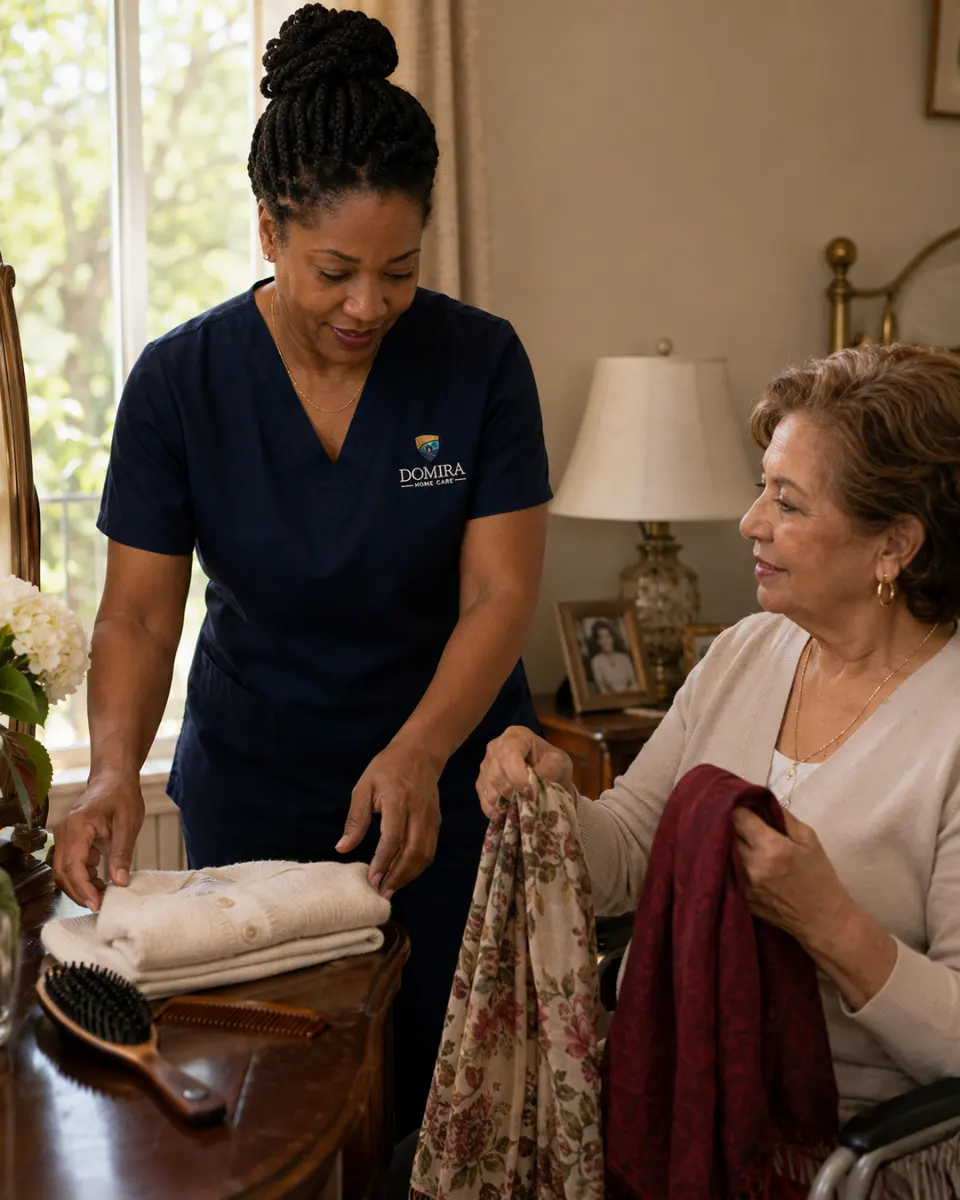
Help with a routine, not just a task
A person may need help reaching the bathroom, managing clothing or getting cleaned up afterward. Another may need a quiet reminder or assistance changing an absorbent product. The right plan starts with which steps are difficult, rather than treating every person as fully dependent.
Domira includes toileting and incontinence assistance within personal care. During the assessment, we discuss the help needed, mobility, supplies, preferred routines and how to make assistance feel comfortable. The aim is to support daily life, not take over every step.
What practical support can include
Getting there and back
Assistance with walking or transfers according to the assessed mobility plan, including help managing clothing and returning comfortably to the usual activity.
Hygiene and fresh clothing
Respectful help with cleansing, changing agreed continence products, dressing and handling soiled clothing or bedding without making the person feel embarrassed.
Cues and preparation
A calm reminder, supplies within reach and time to follow a familiar routine. Someone who can do a step independently should have the opportunity to do it.
Protect dignity before, during and after care
Ask what the person prefers to call the task, explain what is about to happen and seek permission before touching or assisting. Close doors or curtains as appropriate, keep the person covered where possible, and speak to them as an adult. Discuss concerns privately, not in front of visitors.
Caregiver matching matters especially with intimate care. Tell Domira about preferences that would make help easier to accept. Familiar caregivers can learn the small details that matter, from where supplies are kept to the pace that feels comfortable.
A spouse or adult child does not have to provide every intimate-care task to remain involved. Families can choose what they want to keep doing and what they would rather place with a professional caregiver.
When memory changes make bathroom routines harder
For someone living with dementia, finding the bathroom or communicating a need can become difficult. The Alzheimer's Association recommends a calm, matter-of-fact approach, privacy and attention to the person's familiar routine. Avoid blame or scolding after an accident.
Use that information to discuss practical cues and assistance in the care plan. A familiar route, an uncluttered space and simpler clothing may make the routine easier. Start with what works for this person rather than imposing a rigid schedule. Our dementia caregiver guide explores communication and everyday routines more broadly.
Plan for when assistance is actually needed
A morning visit can help with getting up, personal care and changing clothing or bedding. It does not provide help later that night. If a family member is repeatedly getting up to assist, include those times when discussing the schedule.
Review the route between bed and bathroom, lighting, mobility assistance and who will be present. Domira can help compare awake overnight and 24-hour care when nighttime needs are part of the concern. The plan should cover the identified need, not simply add hours without a purpose.
What to discuss before the first visit
- Which steps the person manages independently and where help is welcome.
- Usual bathroom routines, nighttime needs and recent changes.
- Mobility or transfer assistance, equipment and relevant clinician instructions.
- Preferred words, privacy needs and caregiver preferences.
- Products, clothing, towels and bedding, including where supplies are kept.
- Who should receive updates and which observations need follow-up.
You do not need to have all of this organized before calling. The home care assessment is where Domira turns observations and preferences into a practical plan.
Separate daily assistance from a new health concern
New or worsening bladder-control problems deserve a discussion with a health care professional. NIDDK advises seeking care right away for inability to pass urine, blood in the urine or painful urination. Do not wait for a home-care consultation to address those symptoms.
Domira provides non-medical daily assistance alongside the medical plan. Caregivers can report observations and support agreed routines; diagnosing the cause or changing treatment belongs with the clinician.
Common questions
Can a home caregiver help with toileting and incontinence?
Yes. Domira can assist with bathroom routines, clothing, personal hygiene and continence needs as part of an assessed personal-care plan. We discuss exactly which steps need help and which the person will continue to do independently.
Can caregivers help change briefs or other continence products?
Yes. Assistance with agreed continence products, cleansing and fresh clothing can be included in the care plan. We review the routine, supplies and level of help before care begins.
What if my parent is embarrassed about accepting help?
Start with the person's preferences and the smallest useful amount of assistance. Explain each step, protect privacy and discuss caregiver fit with Domira. Familiarity and a respectful approach matter more than rushing to finish a task.
Can this support be part of dementia care?
Yes. Gentle cues and familiar bathroom routines can be included in dementia home care. Tell us what is working and what causes distress so the plan can reflect the person rather than a generic routine.
What if assistance is needed overnight?
Tell us when help is needed and who currently provides it. Domira can review awake overnight options rather than assuming daytime visits cover nighttime needs.
Does home care replace medical evaluation for incontinence?
No. A clinician evaluates new symptoms and treatment needs. Domira can provide practical assistance with the daily routine while the family follows up with the medical team.
Sources and practical context
Alzheimer's Association: incontinence and respectful daily support
These sources support the health and dementia-care context. The planning suggestions explain how non-medical assistance can fit daily life; they are not a diagnosis or treatment plan.
Keep exploring what would help
Talk through a sensitive care need with someone who understands.
Nick Julian, Domira's nurse-founder, can discuss privacy, preferences and daily assistance during a free consultation. You do not need to have the right terminology before contacting us.