
Bathing Assistance for Older Adults: How Home Care Helps With Dignity and Safety
Bathing is one of the most private parts of daily care. When balance, strength, memory, pain, or fear makes the bathroom harder to manage, the right support should protect safety without taking away more independence than necessary.
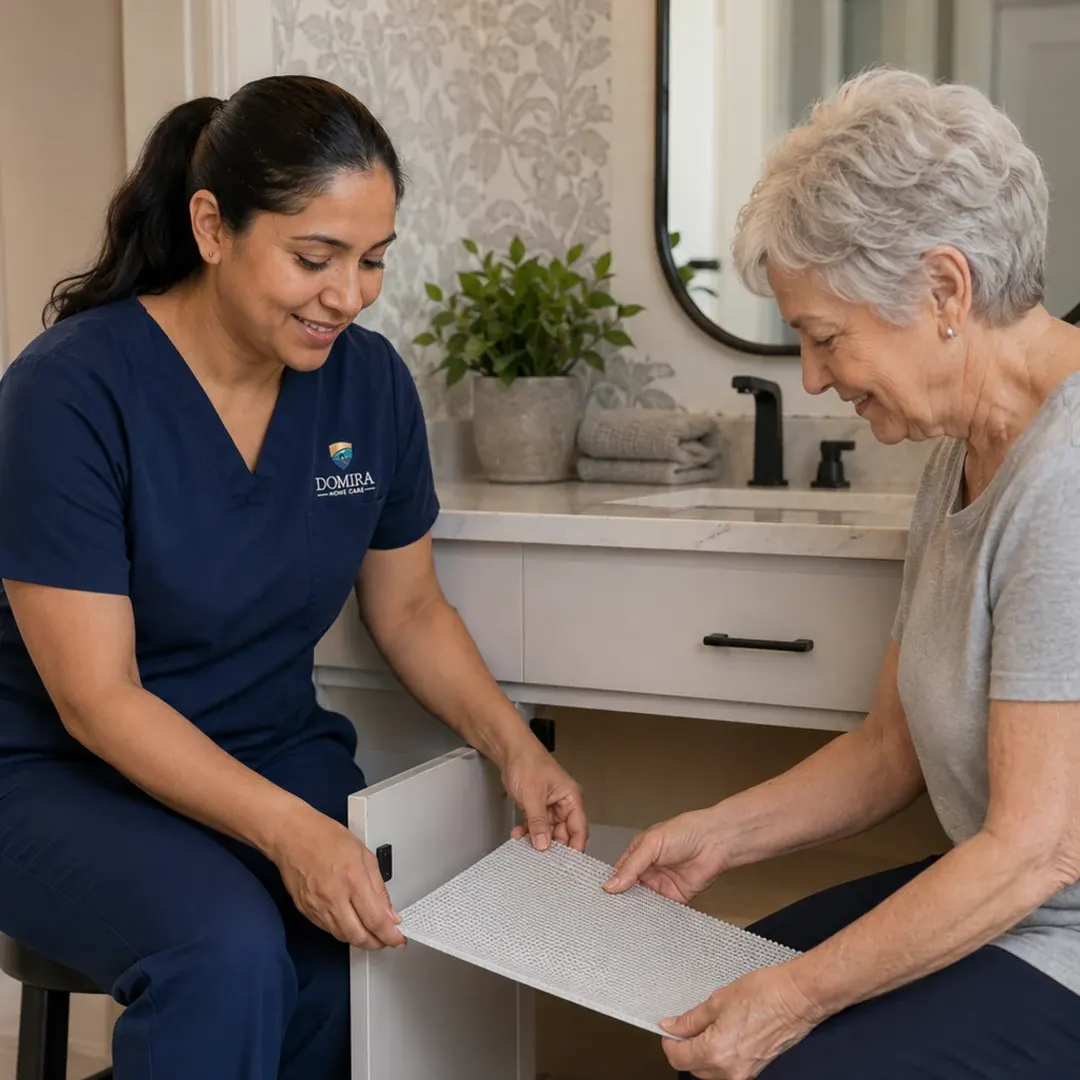
The bathroom combines several small risks in one place.
A person may be completely comfortable in the living room and still struggle once the routine requires wet floors, stepping over a tub edge, standing with eyes closed, reaching, turning, and managing clothing.
Common reasons families begin looking for bathing assistance for seniors include weakness, balance changes, arthritis, pain, limited range of motion, fatigue, vision changes, fear after a prior fall, and difficulty getting in or out of the tub or shower.
Cognitive changes can add another layer. Someone with dementia may lose track of the sequence, misunderstand what is being asked, feel exposed, become frightened by running water, or resist when a caregiver moves too quickly.
The goal is not to automatically take over. It is to identify the exact parts of bathing that are unsafe or difficult and provide only the level of help that is needed.
Bathing assistance can range from nearby supervision to full hands-on personal care.
Prepare the bathroom
Gather towels, clothing, soap, grooming supplies, and other needed items before the person begins.
Provide standby supervision
Stay close enough to help if balance changes while allowing the person to do as much as they can safely manage.
Assist with transfers
Help with getting into or out of the shower or tub according to the care plan and the person's mobility needs.
Provide hands-on bathing help
When needed, assist with washing, rinsing, drying, and hard-to-reach areas while protecting privacy and comfort.
Continue with grooming and dressing
Support hair care, oral care, skin care, clothing, and the rest of the personal-care routine after bathing.
Reset the space
Put away supplies, remove wet towels, and leave the bathroom organized and ready for the next use.
The best assistance is often the least assistance that still keeps the person safe.
Ask before helping. Explain what you are doing. Keep doors and curtains closed. Have towels and clothing ready. Cover the person whenever practical instead of leaving them exposed while supplies are gathered.
Give the person choices that are easy to answer: shower or sponge bath, morning or afternoon, blue shirt or white shirt. Let them wash their face, arms, or other areas they can still manage. Independence does not have to be all-or-nothing.
Caregiver matching matters here more than in many other tasks. Bathing is intimate. A person may be more comfortable with a caregiver of a particular gender, with someone who moves at a slower pace, or with a familiar caregiver who already understands how much help is wanted.
Continuity can make the routine feel less clinical because the caregiver stops being a stranger. The person does not have to repeatedly explain preferences, and the caregiver learns which cues, sequence, and level of assistance work best.
Reduce the environmental hazards before relying on the caregiver to compensate for them.
The Centers for Disease Control and Prevention and the National Institute on Aging both recommend bathroom safety measures as part of fall prevention.
Common steps include installing grab bars inside and outside the tub or shower and near the toilet, using nonslip surfaces where floors may get wet, improving lighting, and considering an appropriate shower chair or bath seat when standing for the full routine is difficult.
Keep soap, towels, shampoo, and clothing within easy reach so the person or caregiver does not need to stretch across a wet surface. Remove loose rugs or other trip hazards. Make sure the water temperature and room temperature are comfortable before beginning.
A caregiver is not a substitute for appropriate equipment. If transfers have become difficult, the family should make sure the environment and mobility plan match the person's current abilities.
Resistance is often communication, not simply refusal.
The National Institute on Aging notes that bathing can feel frightening, embarrassing, or physically unpleasant to a person with Alzheimer's disease. A person may communicate that discomfort by resisting verbally or physically.
If bathing becomes difficult, look at the experience from the person's point of view. Is the room cold? Is the water loud? Is the caregiver rushing? Is the person being asked to undress in front of someone unfamiliar? Is bathing scheduled at a time of day when fatigue or agitation is usually worse?
A familiar sequence can help: prepare everything first, explain one step at a time, use calm language, avoid arguing, and try a different time of day if the pattern repeatedly fails. If the person becomes distressed, forcing the task can make future bathing even harder.
Bathing difficulty can reveal a larger change in the care plan.
Families should pay attention when someone who previously bathed independently suddenly needs extensive help, becomes dizzy, falls, reports new pain, develops skin breakdown or wounds, or has a rapid change in strength or cognition. Those changes may need clinical evaluation.
Bathing may also be the first task that shows the current home-care schedule is too thin. If one family member is doing all transfers, toileting, dressing, and bathing while also managing meals and the household, the problem may no longer be a single personal-care task. It may be the overall care load.
A home care assessment can map which activities of daily living need hands-on help, which only require supervision, what equipment is already in place, and when caregiver support would make the biggest difference.
Bathing assistance questions families often ask
What does bathing assistance for seniors include?
It can include bathroom setup, standby supervision, transfers, hands-on washing or drying, grooming, dressing, and cleanup according to the person's care plan.
How can a caregiver protect dignity during bathing?
Use the least help necessary, explain each step, ask permission, preserve privacy, keep the person covered as much as practical, and let the person do the parts they can still do safely.
Why can bathing become difficult for an older adult?
Common reasons include weakness, balance changes, fear of falling, pain, fatigue, limited range of motion, vision changes, cognitive changes, or difficulty managing several steps in sequence.
What bathroom changes can reduce fall risk?
Grab bars, nonslip surfaces, good lighting, an appropriate shower chair or bath seat, and keeping needed items within easy reach can all help.
What if someone with dementia refuses to bathe?
Avoid forcing or arguing. Look for discomfort, fear, temperature, timing, privacy concerns, or a rushed approach. A calmer routine, familiar caregiver, simpler instructions, and a different time may help.
Sources and scope
National Institute on Aging: Bathing, Dressing, and Grooming
CDC: Preventing Falls and Hip Fractures
This guide addresses non-medical personal care and home safety. New weakness, dizziness, falls, wounds, pain, or other medically concerning changes should be evaluated by the appropriate healthcare professional.
Continue the planning conversation
Bathing support should feel respectful, not rushed.
If personal care is becoming difficult or unsafe, we can help you think through caregiver matching, the right level of hands-on support, continuity, and the schedule that fits the rest of the day.