HomeServicesPersonal CareCompanion CareHomemaking ServicesAlzheimer's & Dementia CareRecovery SupportExtended Hour CareLocationsFriscoPlanoMcKinneyProsperLittle ElmAubreyThe ColonyNorth DallasAboutResourcesFAQsSchedule a Free Consultation →972-600-2660
Care Planning

Organizing Care Information for an Aging Parent: A Family Handoff Guide

Create a practical family handoff for an aging parent, including contacts, routines, appointments, and non-medical care preferences.

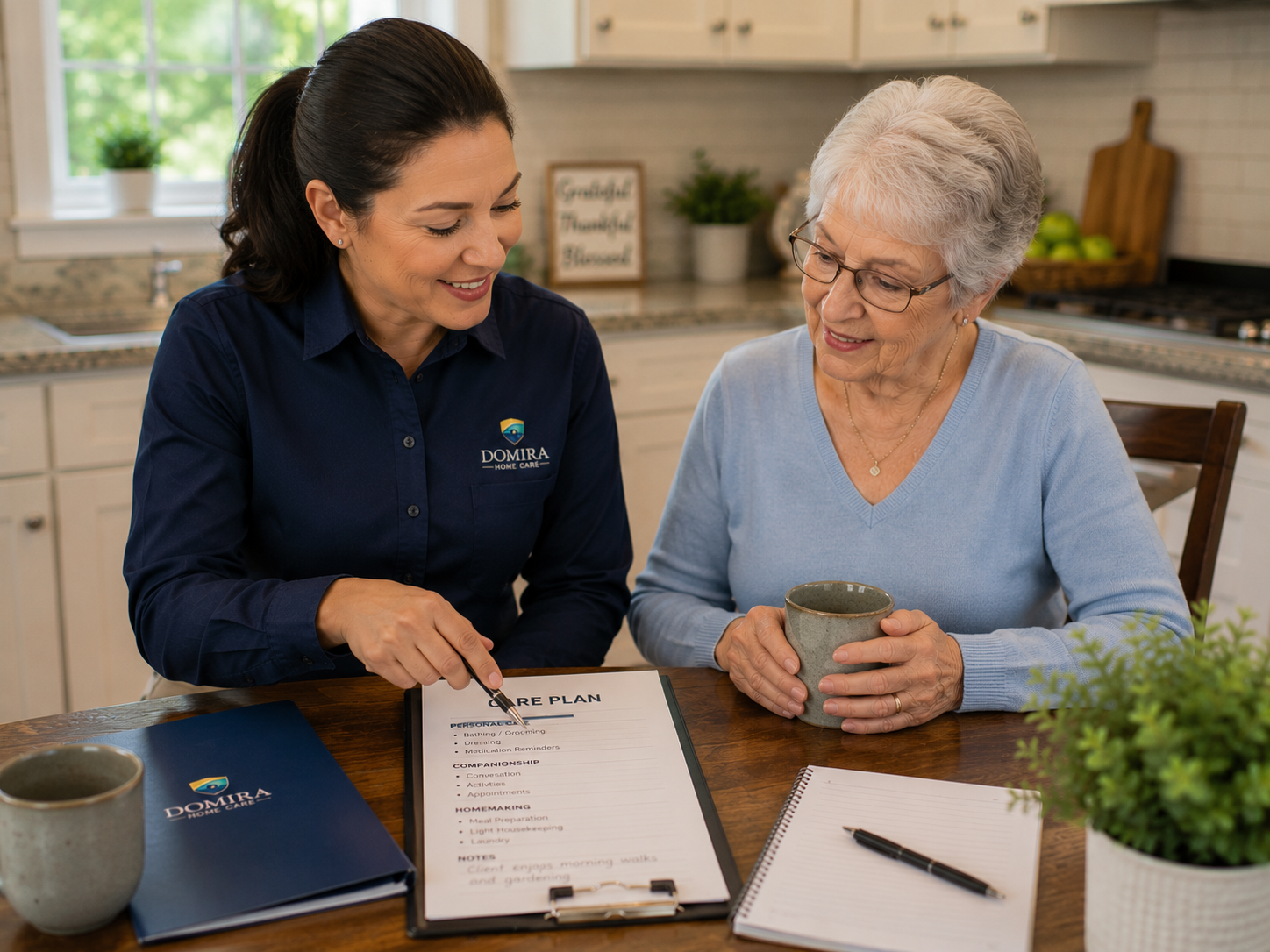
Care coordinator points to a written care plan while an older woman follows along.
Describe the ordinary dayRecord preferred wake time, meals, clothing choices, personal-care preferences, activities, communication style and household tasks. Include what the person prefers to do independently, because support should not erase those choices.
Define contacts and authorityClarify who manages scheduling, who receives routine updates and whom to call about urgent concerns. Legal and clinical authority should not be inferred merely from someone's name appearing on a list.
Keep the plan currentDecide who will revise the routine after a change, how a caregiver learns about the update, and when obsolete instructions are removed.

When several family members, caregivers and providers are helping an aging parent, important information can become scattered across texts, paper notes and appointment reminders. A practical care-information folder can reduce repeated questions and make a new caregiver's first shift less confusing. It should be concise, kept secure and divided into non-medical routine information and records that belong with licensed professionals.

Begin with contacts and responsibilities

Identify the older adult's preferences, the primary family contact, relevant authorized decision-makers and the agency contact. Clarify who manages scheduling, who receives routine updates and whom to call about urgent concerns. Legal and clinical authority should not be inferred merely from someone's name appearing on a list.

Keep detailed personal identification, payment data, credentials or other unnecessary sensitive information out of informal shared documents.

Write down the ordinary routine

Record preferred wake time, meals, clothing choices, personal-care preferences, activities, communication style and household tasks. Include what the person prefers to do independently, because support should not erase those choices.

A brief description of how the day normally works can be more useful to a new caregiver than a long biography without practical details.

Separate non-medical instructions from clinical records

Healthcare professionals should maintain and explain medication orders, diagnoses, treatment instructions, equipment settings and other clinical information. Non-medical caregivers may provide appropriate reminders and support assigned routines within the care plan; they do not administer medications, perform treatment or interpret a medical chart.

If a clinical instruction is unclear, the family should seek clarification from the responsible licensed provider rather than asking a caregiver to make a judgment.

Include household access and safety information

Entry instructions, pets, important contacts, mobility considerations within the approved plan, bathroom location and where routine supplies are stored can prevent avoidable confusion. Information should be limited to what the person and caregiver need for the agreed tasks.

Use the agency's approved secure method for sharing sensitive operational details. An open document or text thread is not automatically an appropriate place for protected information.

Make updates manageable

A care folder is useful only if it stays current. Decide who will revise the routine after a change, how a caregiver learns about the update, and when obsolete instructions are removed. A hospital visit, new caregiver, schedule change or shift in needs may require a review.

It is also helpful to distinguish an observation from a confirmed clinical finding. “Had difficulty reaching the bathroom this morning” is different from stating a medical cause.

Use the plan to support continuity

A consistent care plan helps caregivers begin prepared and allows families to focus on the relationship rather than repeatedly explaining the basics. Domira uses structured assessment, caregiver matching and family communication to organize practical home support.

See Home Care Assessment, What an In-Home Caregiver Does, and Family Caregiver Burnout for related guidance. Schedule a consultation to discuss a usable daily-care handoff.

Frequently Asked Questions

Common Questions Families Ask

Whose contact details and responsibilities should be recorded?

Identify the older adult's preferences, the primary family contact, relevant authorized decision-makers and the agency contact. Clarify who manages scheduling, who receives routine updates and whom to call about urgent concerns. Legal and clinical authority should not be inferred merely from someone's name appearing on a list.

Keep detailed personal identification, payment data, credentials or other unnecessary sensitive information out of informal shared documents.

Which daily routines should a care handoff include?

Record preferred wake time, meals, clothing choices, personal-care preferences, activities, communication style and household tasks. Include what the person prefers to do independently, because support should not erase those choices.

How should clinical records be kept separate from caregiver instructions?

Healthcare professionals should maintain and explain medication orders, diagnoses, treatment instructions, equipment settings and other clinical information. Non-medical caregivers may provide appropriate reminders and support assigned routines within the care plan; they do not administer medications, perform treatment or interpret a medical chart.

If a clinical instruction is unclear, the family should seek clarification from the responsible licensed provider rather than asking a caregiver to make a judgment.

What household information should be shared?

Entry instructions, pets, important contacts, mobility considerations within the approved plan, bathroom location and where routine supplies are stored can prevent avoidable confusion. Information should be limited to what the person and caregiver need for the agreed tasks.

Use the agency's approved secure method for sharing sensitive operational details. An open document or text thread is not automatically an appropriate place for protected information.

How do we keep the care folder useful after the first visit?

A care folder is useful only if it stays current. Decide who will revise the routine after a change, how a caregiver learns about the update, and when obsolete instructions are removed. A hospital visit, new caregiver, schedule change or shift in needs may require a review.

Sources and scope

Healthcare professionals should maintain and explain medication orders, diagnoses, treatment instructions, equipment settings and other clinical information. Non-medical caregivers may provide appropriate reminders and support assigned routines within the care plan; they do not administer medications, perform treatment or interpret a medical chart.

Care Planning

Need Help Organizing a Care Handoff?

A consistent care plan helps caregivers begin prepared and allows families to focus on the relationship rather than repeatedly explaining the basics.