
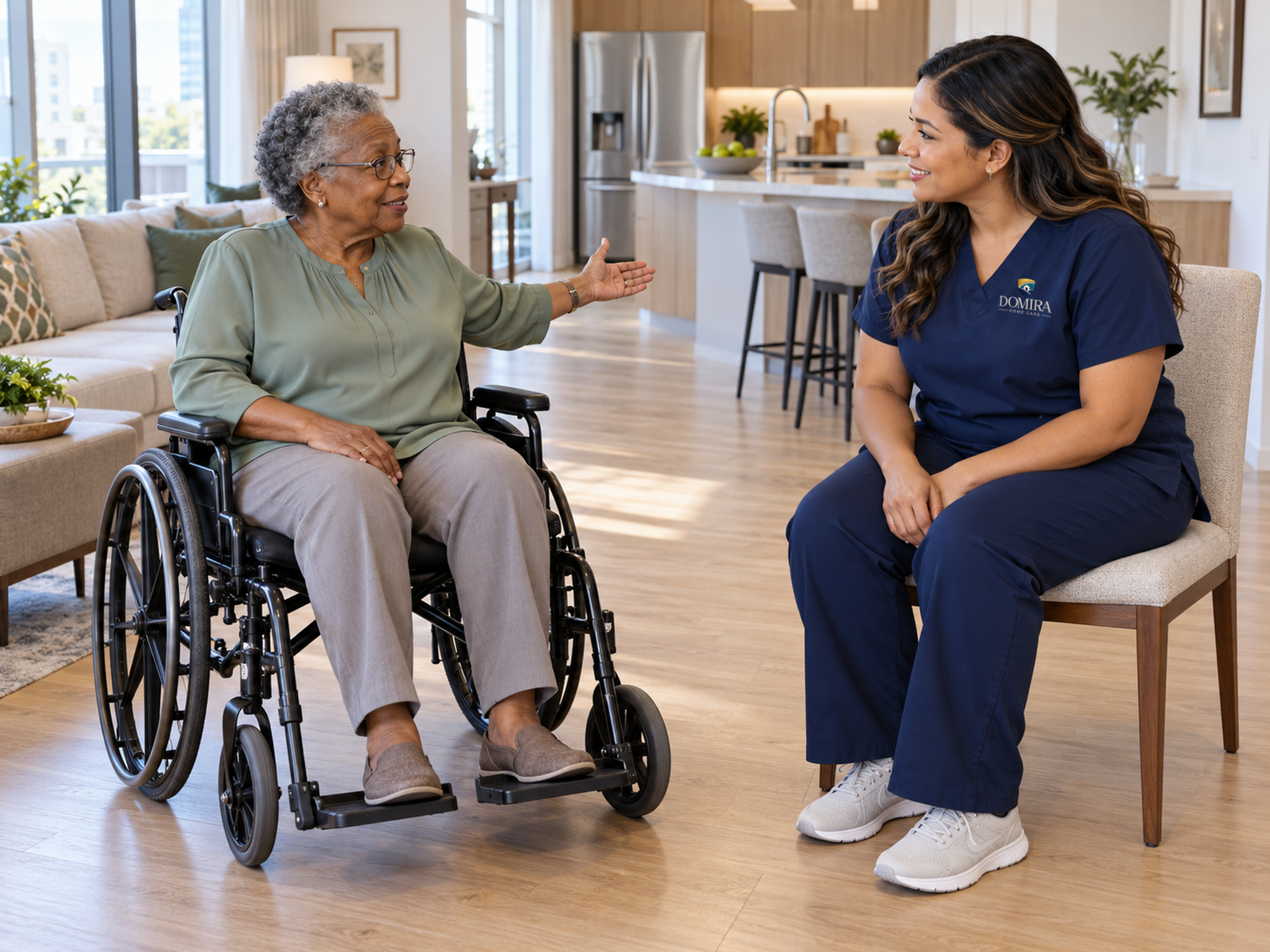
Wheelchair use changes how a person moves through familiar rooms, but it does not define what they can do independently. One household may need a safer path from bedroom to kitchen. Another may need additional help with bathing, meal preparation or transportation. Practical planning starts with the person's routine and preferences, followed by professional guidance for any specialized access or mobility requirements.
Map the places used every day
Walk through the typical route to the bathroom, bedroom, kitchen, living area and entryway. Ask which destinations are difficult to reach and which tasks are becoming inconvenient. A cluttered route, an awkward cabinet or a poorly placed household item may create a problem unrelated to the wheelchair itself.
Do not assume that simply removing obstacles makes every route or transfer safe. Structural accessibility and equipment decisions may need assessment by qualified professionals.
Keep the person's choices at the center
Ask where they prefer to keep supplies and how they want assistance offered. Moving belongings without permission can make a familiar room harder to use. The caregiver should support the person's preferred routine and explain any proposed change before rearranging the environment.
The objective is easier access to ordinary activities, not an impersonal “accessible house” checklist that ignores how the person actually lives.
Clarify personal care and transfer assistance
Some individuals use a wheelchair independently. Others need help with bathing, dressing, toileting, positioning or transfers. These are distinct care tasks with different requirements. Caregiver assistance must remain within training, the approved care plan and any precautions established by licensed professionals.
A non-medical caregiver should not invent lifting techniques, select adaptive equipment or provide occupational or physical therapy. When the appropriate approach is uncertain, obtain qualified assessment before proceeding.
Organize meals, laundry and household work
Practical support may include preparing meals, placing commonly used items where the individual prefers them, light housekeeping, changing linens, shopping and running errands. A consistent caregiver becomes familiar with the home layout and can help maintain an orderly environment without repeatedly reorganizing the person's belongings.
Family members should explain household access instructions and communication preferences before the first shift.
Plan for leaving the house
Appointments and outings may involve driveway access, vehicle transfer requirements and accessibility at the destination. Discuss those details with the person and, when appropriate, qualified providers. Transportation or accompaniment through non-medical home care depends on the person's needs and caregiver qualifications.
A practical schedule leaves room for preparation and return-home routines instead of treating the trip as only travel time.
Reassess the plan as abilities and needs change
If the person is doing more independently, the tasks and hours may need adjustment. If new limitations appear, the family may require healthcare input and a revised care plan. Domira can discuss routine support, caregiver matching and family communication while maintaining non-medical boundaries.
Start with Home Safety Checklist, Personal Care Assistance, and What Happens During a Home Care Assessment. Schedule a free consultation to discuss daily assistance in the actual home environment.