
Supplemental Home Care in Assisted Living & Memory Care
Moving into senior living does not always eliminate the need for individualized support. Families can sometimes add a private caregiver for one-on-one time, routines, personal care, companionship, mobility, or family communication, subject to the community's policies.
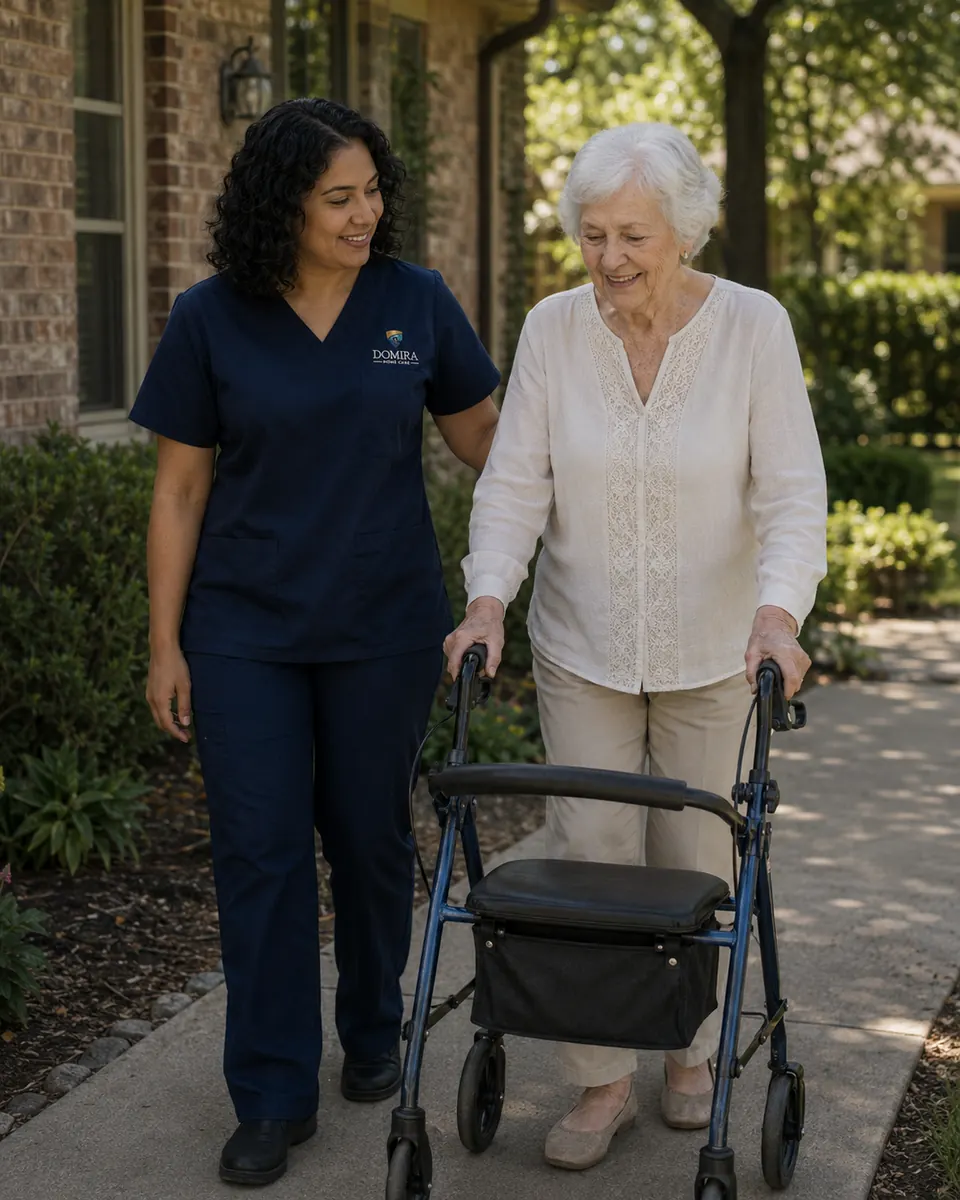
A private caregiver can add one-on-one support inside a residential community.
Senior living provides a residential service model. Supplemental home care adds a separate caregiver focused on one resident during the scheduled care period.
The arrangement may be useful in independent living, assisted living, memory care, or another residential setting when the resident would benefit from more individualized time than the community's standard service model provides.
Because the resident lives in a community rather than a private house, the private caregiver must work within the community's access rules, safety policies, service plan, and staff responsibilities.
Why families add one-on-one support in senior living
Supplemental care should solve a specific gap or preference rather than duplicate services without a clear purpose.
Personal routines
Extra one-on-one time for bathing, dressing, grooming, toileting, or getting ready at the resident's preferred pace when permitted within the care arrangement.
Dementia cueing and familiar routine
A consistent caregiver can provide individualized cueing, redirection, companionship, and activity support alongside the memory-care community's program.
Mobility and outings
A caregiver can accompany the resident for walking, appointments, errands, family visits, worship, or community outings when allowed by the care plan and residence.
Meals and hydration routines
One-on-one prompting, setup, companionship, or routine support can help a resident who benefits from more individualized attention around meals.
Companionship and activities
The caregiver can focus on the resident's preferred hobbies, conversation, reading, music, walks, or other meaningful activities rather than only group programming.
Family communication
A private agency can provide an additional communication channel about the resident's routines and observations, with appropriate authorization and coordination.
Supplemental care works best when everyone knows who is responsible for what.
The private caregiver should complement the community's plan, not create a second uncoordinated system.
Residential services and community responsibilities
The community provides the housing, staffing, meals, activities, and care services described in its agreement, assessment, and licensing model.
Scheduled one-on-one support
The private caregiver focuses on the individual tasks, routines, companionship, transportation, and family communication assigned under the separate home-care plan.
Questions to resolve with the senior-living community
Policies vary. Get the community's requirements before the first private-care shift.
Ask whether the community allows a resident to use a third-party home care agency or privately hired caregiver.
The community may request insurance, agency, caregiver, health-screening, orientation, or other documents before access is granted.
Clarify personal care, transfers, meals, transportation, medication reminders, activities, and any tasks reserved for community staff.
Decide when the caregiver should contact family, the private agency, community staff, or emergency services.
Plan check-in, parking, badges, keys, elevators, meal times, quiet hours, and after-hours access.
The private caregiver needs clear instructions for community emergency procedures and for reporting meaningful changes within the agency's role.
One-on-one support can be especially useful when the resident benefits from familiar routines.
Memory-care communities provide structured residential dementia support, while a private caregiver can add individualized time around the person's own history, interests, and preferred pace.
A supplemental caregiver can focus on the resident's familiar music, walks, conversation, personal-care routine, mealtime cues, outings, or other activities that are difficult to deliver one-on-one throughout the community day.
The private care plan should align with the community's dementia-care approach and safety rules. The caregiver should not override community clinical or medication policies.
Supplemental care adds a second service layer to the senior-living budget.
The family should understand both the community's monthly charges and the separate private-care cost.
- Review which personal-care and support services are already included in the senior-living fee.
- Ask what care-level or service fees the community adds when needs increase.
- Define which gaps the private caregiver is being hired to fill.
- Estimate the supplemental caregiver schedule and rate separately.
- Check long-term care insurance or other benefits for rules on care delivered in a residential setting.
- Reassess whether the extra one-on-one care is still solving the intended need over time.
Domira provides one-on-one support in senior-living settings.
Care is built around the individual resident while respecting the community's role.
Domira can provide private-pay one-on-one support for clients in independent living, assisted living, memory care, and similar settings. The care plan can include companionship, personal care, cueing, mobility support, transportation, routines, and family communication within Domira's scope and the community's policies.
Before care begins, Domira coordinates practical access and care-plan boundaries with the family and community as needed.
Supplemental home care in senior living questions
Can a resident in assisted living have a private caregiver?
Often, but the senior-living community's policies control access and requirements. Families should confirm whether outside caregivers are permitted, what documentation is required, and which tasks may be performed before arranging care.
Why would someone need private home care if they already live in assisted living?
A resident may benefit from additional one-on-one time for personal routines, companionship, dementia cueing, mobility, outings, meals, transportation, or family communication beyond what the community's standard staffing model provides.
Can private home care be used in memory care?
It can when the memory-care community permits outside caregivers. Supplemental care can add familiar one-on-one routines, cueing, companionship, personal care, activities, or outings while coordinating with the community's safety and dementia-care plan.
Does a private caregiver replace the assisted-living staff?
No. The community remains responsible for the services and obligations defined by its agreement, assessment, license, and policies. The private caregiver provides a separate layer of scheduled one-on-one support.
Who manages medications when a private caregiver works in assisted living?
Medication responsibility should be clarified with the community and private agency before care starts. Domira caregivers provide medication reminders within the care plan but do not administer medications or override the community's medication system.
Can a private caregiver take a senior-living resident to appointments or outings?
Yes when transportation or accompaniment is in the private care plan and the resident, family, community, and provider requirements are satisfied. Building sign-out and transportation policies should be confirmed.
How is supplemental senior-living care paid for?
It is commonly a separate private-pay expense in addition to the residential community's fees. Long-term care insurance or other benefits may apply depending on the policy, setting, provider, and benefit rules.
Sources and scope
National Institute on Aging: Assisted Living and Nursing Homes
Texas Health and Human Services: Long-Term Care Options
Senior-living communities vary in license, staffing, services, fees, and outside-provider policies. Confirm the rules of the specific residence before arranging supplemental private care.
Continue the planning conversation
Looking for more individualized support inside a senior-living community?
Domira can assess the resident's needs, clarify the community's requirements, and build a private care plan around the one-on-one support the family wants to add.
Schedule a Free Consultation