
Palliative Care at Home
Palliative care focuses on quality of life during serious illness. When that clinical care is happening at home or around outpatient treatment, Domira can help carry the practical side of the day so the person and family are not managing every routine alone.
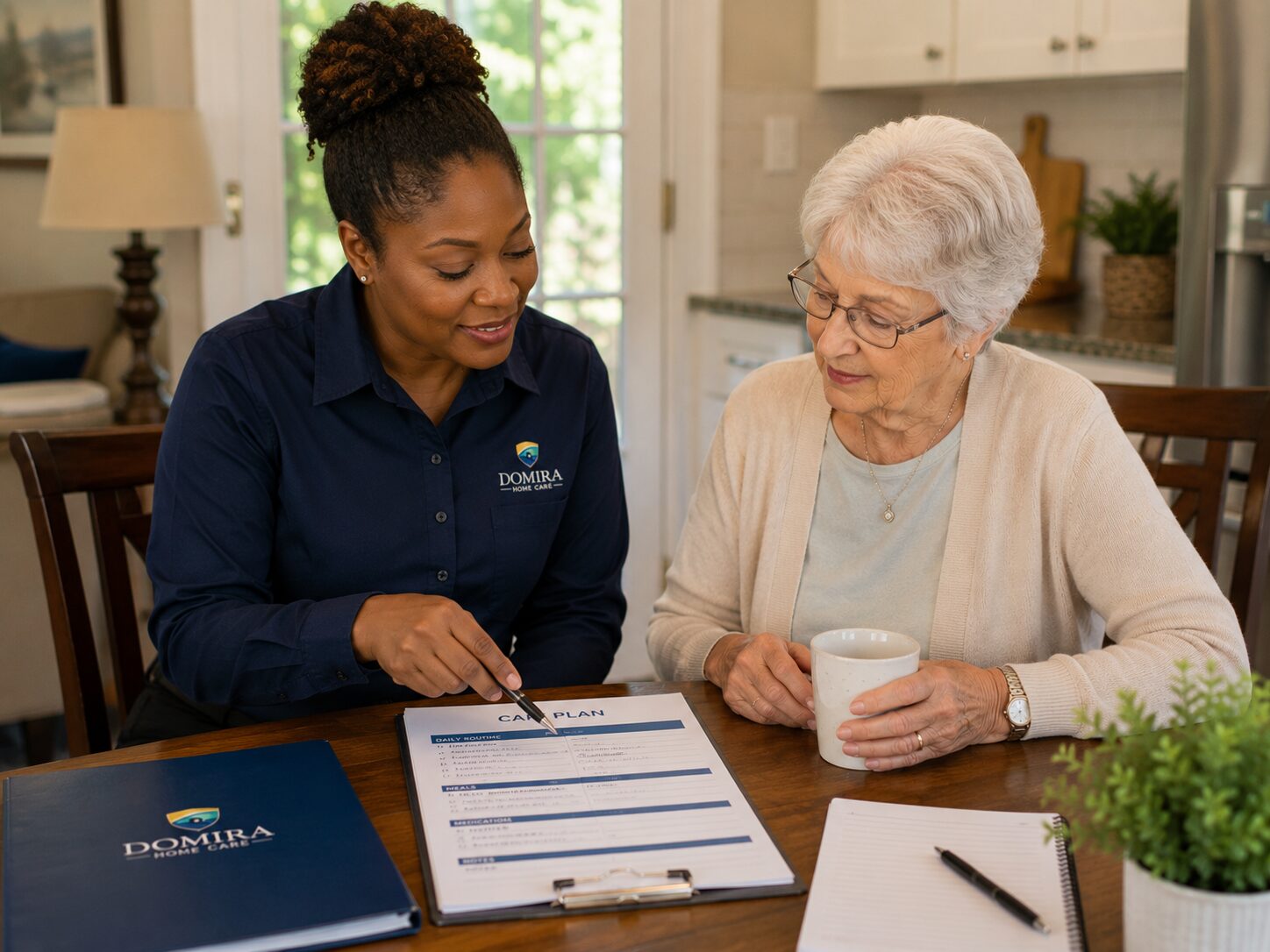
Build support around the day, not just the diagnosis.
The diagnosis helps explain what the family is facing. The care plan still comes down to the specific routines, hours, preferences, and responsibilities that need another capable person.
Personal care
Bathing, dressing, grooming, toileting, mobility assistance, and other daily routines when the person needs more help.
Meals and household support
Meal preparation, hydration reminders, groceries, laundry, light housekeeping, and keeping daily routines manageable.
Transportation
Rides or accompaniment for appointments, treatments, follow-up visits, errands, and other planned needs.
Medication reminders
Reminders according to the established medication plan while clinical medication management remains with the appropriate provider.
Companionship
Conversation, shared activities, quiet presence, and support maintaining familiar routines when illness has changed the normal day.
Family respite and longer coverage
Recurring shifts, longer days, awake overnight care, or additional coverage when family members need relief or the person needs more support.
Preserve independence where possible. Add help where it is needed.
We prepare the caregiver around the person's routines, preferences, communication style, mobility needs, household expectations, family roles, and the plan already in place. Care can change as the situation changes without forcing the family into a completely different service category.
Match for the actual household
Relevant experience matters, along with temperament, patience, pace, communication, schedule, and how the caregiver fits into the home.
Make the routine easier to recognize
Familiar caregivers reduce the amount of re-explaining and can learn the details that make a person's day work better.
Questions families often ask
Is palliative care only for the end of life?
No. Palliative care can be used at any stage of a serious illness and can be provided alongside treatment intended to treat or control the illness.
Is palliative care the same as hospice?
No. Hospice is a specific form of end-of-life care. Palliative care can begin much earlier and may continue while disease-directed treatment is still being received.
What does Domira do when a palliative care team is involved?
Domira can support personal care, meals, mobility, transportation, companionship, household routines, respite, and longer coverage while the clinical team manages medical care.
Can Domira help during cancer, heart failure, lung disease, or another serious illness?
Yes, when the person needs home care support with daily routines that fall within Domira's care scope. The specific plan is based on the person's needs rather than the diagnosis alone.
Can care be short-term or ongoing?
Yes. Some families use support during a treatment or recovery period, while others use recurring care as a serious illness changes over time.
Sources and scope
National Institute on Aging: Frequently Asked Questions About Palliative Care
National Institute on Aging: What Are Palliative Care and Hospice Care?
Domira supports daily life around a palliative care plan. Medical palliative care, symptom management, prescribing, skilled nursing, and clinical treatment remain with the person's physicians and licensed palliative care team.
Keep exploring the situation
Tell us what the day looks like now.
You do not need to know which service label fits. We can talk through the routines, hours, family capacity, and level of support that would make the home more manageable.