
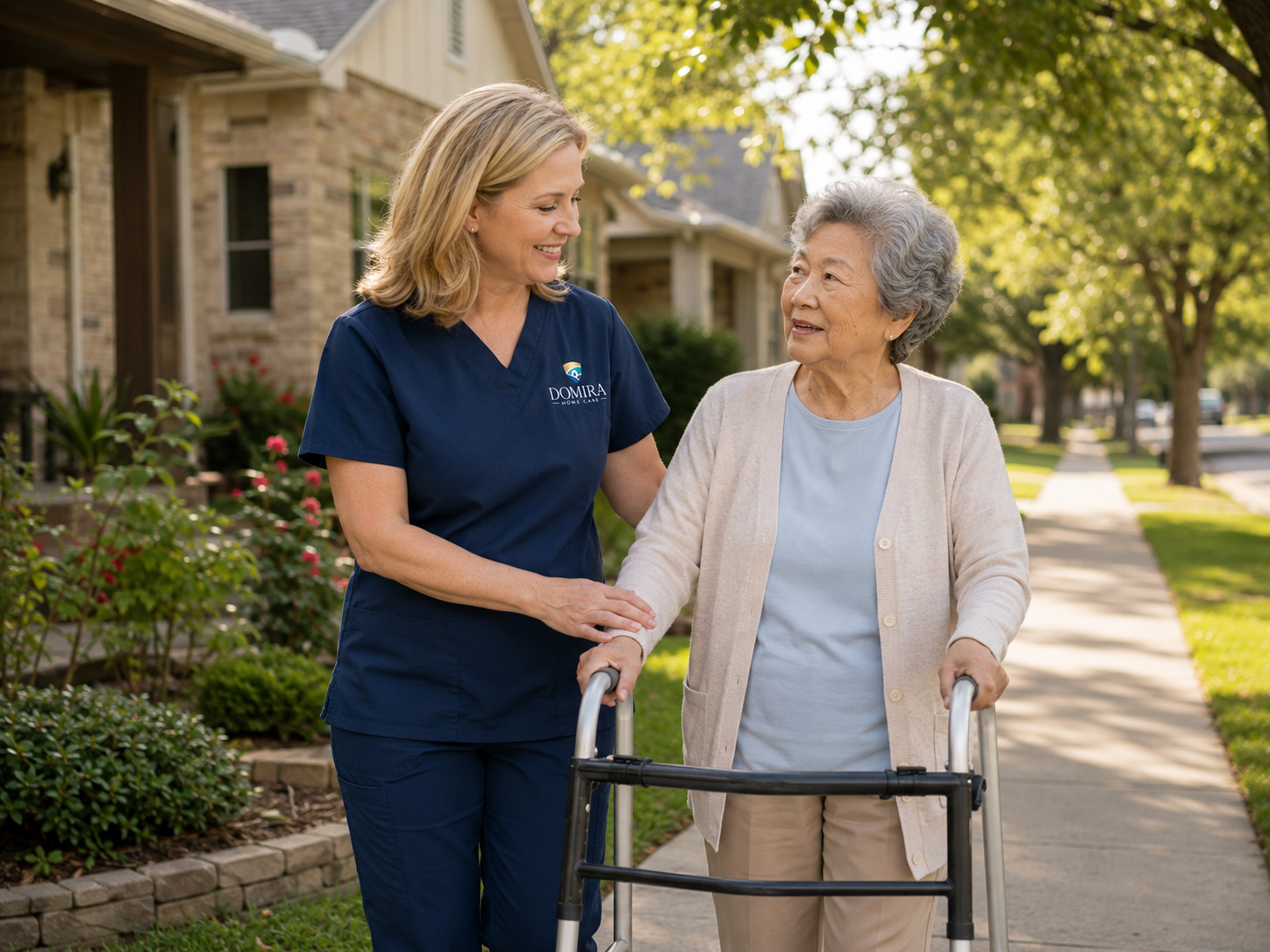
A fall can change how an older adult feels about ordinary activities. Getting up to use the bathroom may now seem intimidating. A spouse may be reluctant to leave the house. A family may be trying to determine which parts of the day need assistance after a hospital visit or rehabilitation stay. Once urgent medical questions have been addressed, the practical challenge is organizing daily life so the person is not left managing more than they can reasonably do alone.
Start with the healthcare team's directions
After a fall, a qualified provider should evaluate injuries, symptoms, and the need for further care. Follow the licensed team's instructions regarding mobility precautions, medications, equipment, rehabilitation and warning signs. New pain, head injury concerns, dizziness or worsening function should not be handled as a home-care scheduling problem alone.
Non-medical caregivers do not diagnose injuries or determine whether someone can safely transfer or walk without clinical input when that is needed.
Review the moments that have become difficult
Think through the day in order. Is it getting out of bed, toileting, bathing, dressing, preparing meals, or walking to another room that now requires help? What household tasks are being missed because movement has become more difficult? Are appointments or therapy visits scheduled?
This list helps turn a vague request for “someone to keep an eye on Mom” into specific care tasks and hours. It also clarifies what family members can realistically handle.
Prepare the home for the revised routine
Walk through the normal routes between bedroom, bathroom, kitchen and main living area. Identify clutter, lighting concerns, awkward storage and access issues to discuss with the family and appropriate professionals. Equipment selection and specialized transfer techniques should follow qualified recommendations.
A caregiver can help keep everyday pathways and commonly used items organized. The family should avoid improvising lifts or activities beyond the person's current professional instructions.
The CDC’s fall-prevention guidance includes checking household trip hazards and lighting alongside a clinician’s assessment of fall risk. A non-medical caregiver can help maintain an agreed household routine, but does not independently prescribe equipment or rehabilitation.
Arrange help beyond medical appointments
Recovery often includes much ordinary work: meals, laundry, bathing, grooming, transportation, errands, and companionship. A caregiver may assist with those activities within an individual care plan while a therapist, nurse, or doctor handles skilled care.
If a licensed therapist assigns exercises to be completed between visits, a non-medical caregiver may be able to provide appropriate reminders or routine support consistent with the care plan, but does not independently perform therapy or choose exercises.
Keep communication clear after the first shifts
Identify who receives updates and what observations should prompt a prompt call. A caregiver who notices new difficulty walking, a change in routine, or a new safety concern should know how to report it. The family and qualified providers decide what action is needed.
When care begins, review whether the original schedule covers the actual high-need times. A first-week adjustment may matter more than simply extending every shift.
Know when the plan needs to change
The person may gradually regain some independence, remain stable with a consistent schedule, or need additional help. The plan should be reviewed against real activities, not assumptions about how recovery should progress. A new health concern still belongs with the clinical team.
For practical related guidance, see Fall Prevention at Home, Post-Surgery Home Care, and Hospital Discharge Planning. Domira can discuss non-medical support after the clinical needs are clarified.