HomeServicesPersonal CareCompanion CareHomemaking ServicesAlzheimer's & Dementia CareRecovery SupportExtended Hour CareLocationsFriscoPlanoMcKinneyProsperLittle ElmAubreyThe ColonyNorth DallasAboutResourcesFAQsSchedule a Free Consultation →972-600-2660
Home Routines

Making Home Routines Safer for an Older Adult With Low Vision

Make everyday routines easier to navigate for an older adult with low vision through lighting, household organization, and appropriate help.

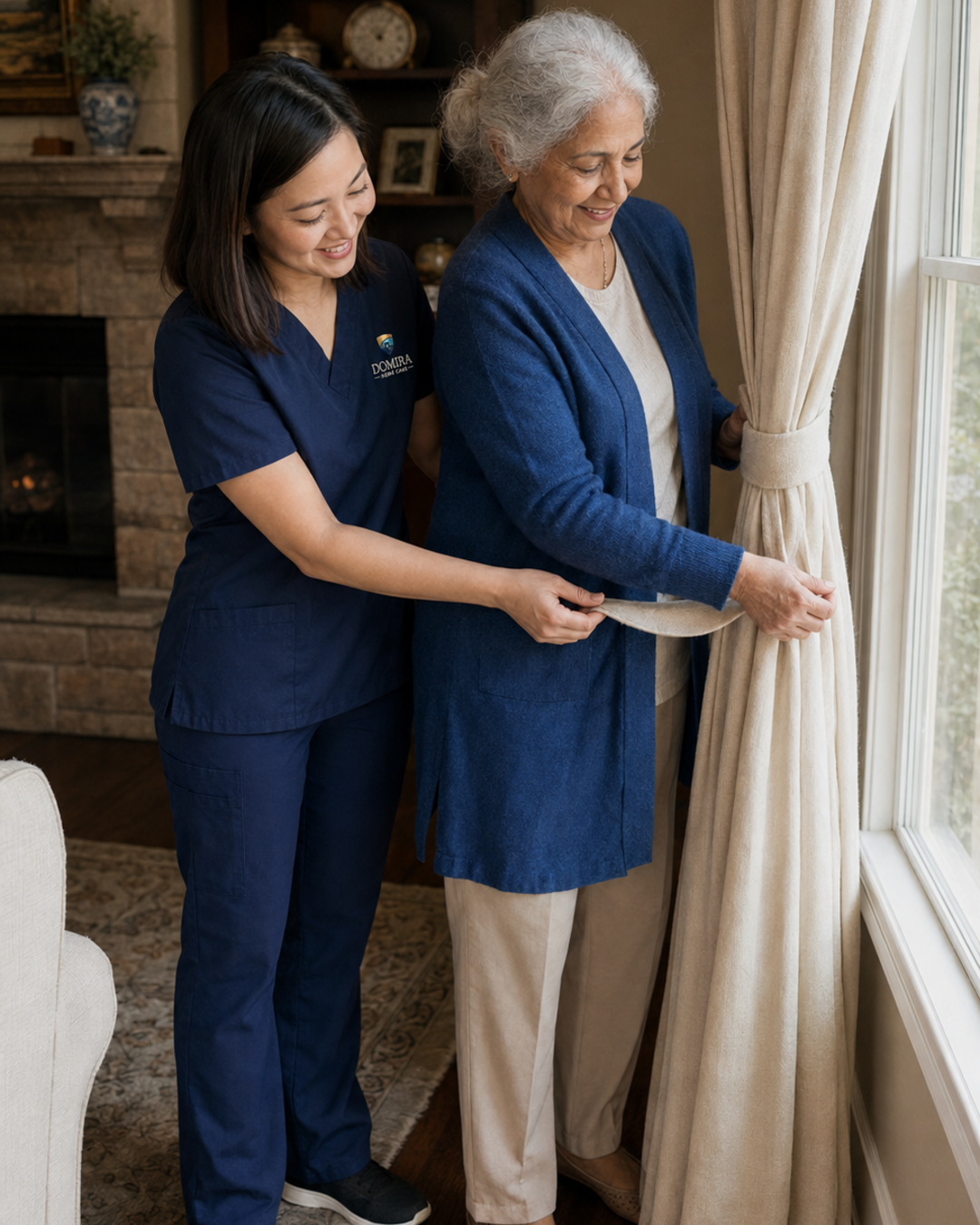
Caregiver and older woman fasten a curtain tieback beside a window.
Ask before assuming help is neededAvoid assuming that the person cannot do a task simply because they have a vision condition. Preferences and abilities vary. Ask what they want to manage independently and where assistance would be welcomed.
Keep everyday items predictableA predictable place for everyday items can reduce unnecessary searching.
Respect belongings and paceDescribe where an item has been placed, ask before moving personal belongings, and avoid rushing.

When an older adult's vision changes, familiar tasks can require more time and effort. Reading a label, locating a favorite mug, navigating a dim hallway, or finding clothing in a drawer may become frustrating. Families can often make daily life more manageable by understanding which tasks are difficult, preserving familiar organization, and arranging practical support. Changes in vision should also be assessed by the appropriate eye-care professional, especially when they are new or worsening.

Start with the person's actual routine

Walk through an ordinary day together. Ask which activities feel comfortable and which require guessing, extra effort, or help. It may be preparing breakfast, selecting clothing, reaching the bathroom at night, or leaving the house for an appointment.

Avoid assuming that the person cannot do a task simply because they have a vision condition. Preferences and abilities vary. Ask what they want to manage independently and where assistance would be welcomed.

Review lighting and household organization

Consider whether commonly used areas have consistent, useful lighting and whether clutter or moved objects make navigation difficult. A predictable place for everyday items can reduce unnecessary searching. Contrasting colors or accessible labels may be helpful, but the appropriate choices should be based on the individual, not a one-size-fits-all checklist.

Changes involving specialized accessibility equipment, major structural alterations, or therapeutic training should be discussed with qualified professionals. Home-care assistance is not a substitute for vision rehabilitation or occupational therapy.

Make personal care and meals workable

Depending on the care plan, a caregiver can help organize toiletries and clothing, support grooming and dressing, prepare meals, keep counters orderly, and assist with walking or transportation within their training and assigned tasks.

Respectful communication matters. Describe where an item has been placed, ask before moving personal belongings, and avoid rushing. The goal is not for a caregiver to perform every task, but to make daily routines easier to manage without unnecessary loss of choice.

Pay attention to unfamiliar spaces

An older adult who knows their home well may still need additional assistance at a medical office, grocery store, or social destination. Discuss the route, parking, entrances and expected activities beforehand. A familiar caregiver may be able to provide transportation and accompaniment when those services are appropriate for the plan.

The person should remain involved in deciding where to go and which assistance is comfortable.

Establish a practical family communication plan

When someone repeatedly struggles with the same task, that information is useful for revisiting the plan. The caregiver should know who receives updates and which concerns need a professional assessment. An abrupt change in vision, new falls or significant functional changes should not be dismissed as ordinary aging.

A consistent caregiver can learn the household's established organization and preferences, helping reduce repeated adjustments.

Review the level of support as needs change

Domira can assess the non-medical tasks affected by vision changes, caregiver experience, family capacity and schedule requirements. For related planning, see Home Safety Checklist for Seniors, Fall Prevention at Home, and Personal Care Assistance. Schedule a consultation to discuss practical support while preserving independence.

Frequently Asked Questions

Common Questions Families Ask

How do we decide which tasks need help when a parent has low vision?

Walk through an ordinary day together. Ask which activities feel comfortable and which require guessing, extra effort, or help. It may be preparing breakfast, selecting clothing, reaching the bathroom at night, or leaving the house for an appointment.

Avoid assuming that the person cannot do a task simply because they have a vision condition. Preferences and abilities vary. Ask what they want to manage independently and where assistance would be welcomed.

What household changes should we consider?

Consider whether commonly used areas have consistent, useful lighting and whether clutter or moved objects make navigation difficult. A predictable place for everyday items can reduce unnecessary searching. Contrasting colors or accessible labels may be helpful, but the appropriate choices should be based on the individual, not a one-size-fits-all checklist.

Changes involving specialized accessibility equipment, major structural alterations, or therapeutic training should be discussed with qualified professionals. Home-care assistance is not a substitute for vision rehabilitation or occupational therapy.

What personal-care and household tasks can a caregiver support?

Depending on the care plan, a caregiver can help organize toiletries and clothing, support grooming and dressing, prepare meals, keep counters orderly, and assist with walking or transportation within their training and assigned tasks.

How can we prepare for an unfamiliar destination?

An older adult who knows their home well may still need additional assistance at a medical office, grocery store, or social destination. Discuss the route, parking, entrances and expected activities beforehand. A familiar caregiver may be able to provide transportation and accompaniment when those services are appropriate for the plan.

The person should remain involved in deciding where to go and which assistance is comfortable.

Which changes should be shared with the family or assessed professionally?

When someone repeatedly struggles with the same task, that information is useful for revisiting the plan. The caregiver should know who receives updates and which concerns need a professional assessment. An abrupt change in vision, new falls or significant functional changes should not be dismissed as ordinary aging.

Sources and scope

Changes involving specialized accessibility equipment, major structural alterations, or therapeutic training should be discussed with qualified professionals. Home-care assistance is not a substitute for vision rehabilitation or occupational therapy.

Care Planning

Could Daily Support Make Home Easier to Manage?

Domira can assess the non-medical tasks affected by vision changes, caregiver experience, family capacity and schedule requirements.