
An older adult living with chronic obstructive pulmonary disease, or COPD, may have an established treatment plan and still find ordinary tasks tiring or difficult. Family members sometimes confuse the need for daily help with the need for additional skilled care. Both may be relevant, but they serve different purposes. Non-medical home care can support the household routine while respiratory assessment, treatment and activity instructions remain with licensed professionals.
Keep treatment decisions with the clinical team
The person's healthcare professionals determine medications, oxygen use, respiratory equipment, exercises, medical precautions and when a symptom requires urgent evaluation. A Domira caregiver does not administer medication, change oxygen settings, provide respiratory therapy, or interpret symptoms as a diagnosis.
Families should make sure the care plan clearly identifies whom to contact about a medical change. New or worsening breathing difficulty must be handled according to appropriate clinical or emergency guidance, not as a routine housekeeping issue.
Identify everyday tasks that are difficult
It may be challenging to prepare a meal, carry laundry, clean the kitchen, take out trash, shop or keep appointments. Ask which activities create the most practical difficulty and which the person wants to continue doing independently.
Home care can help organize those tasks into manageable visits. It is not necessary for an article or caregiver to prescribe a pace of physical activity or a treatment routine; follow the individual's professional instructions.
Support personal care and household organization
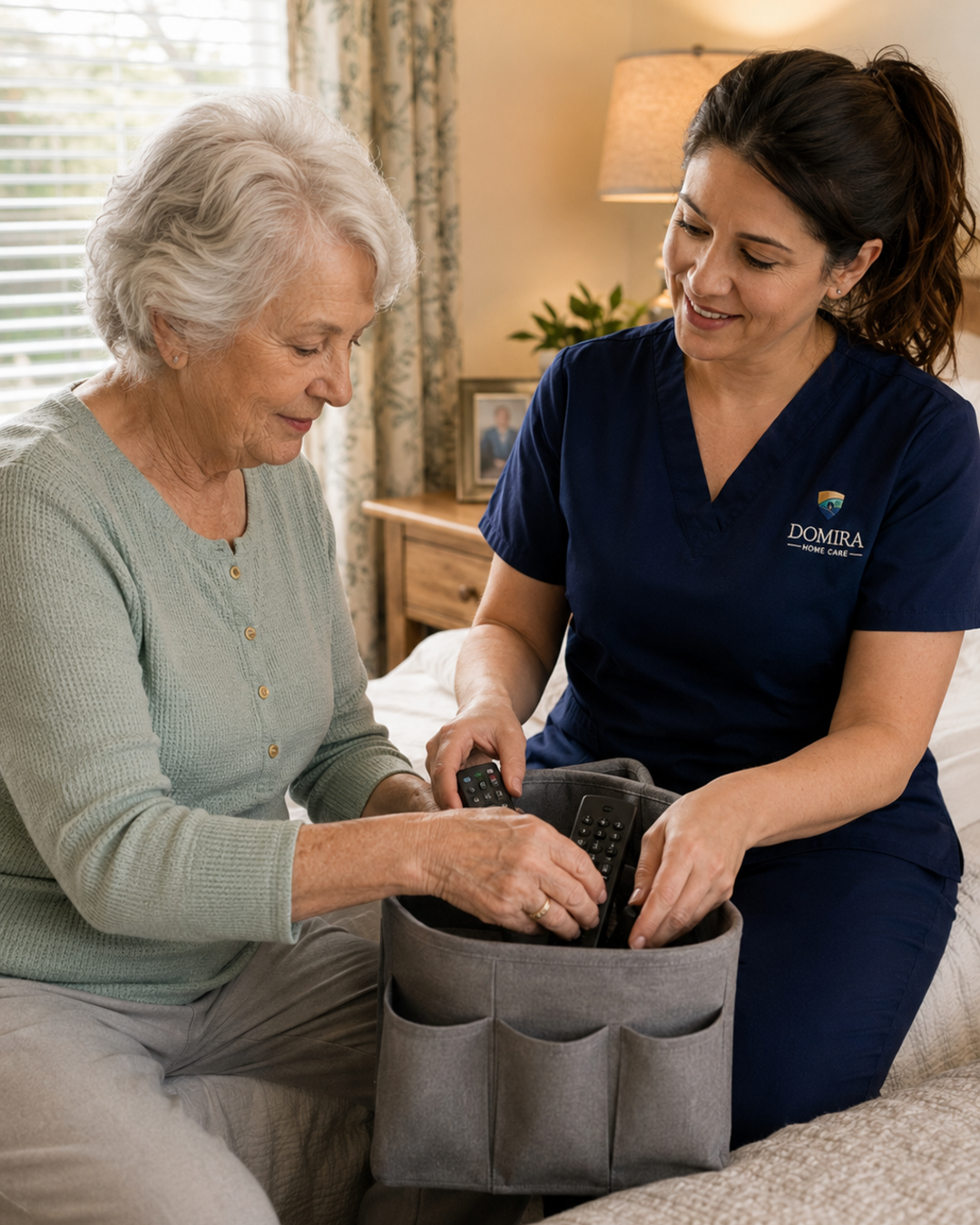
If bathing, dressing, grooming or mobility require assistance, appropriate hands-on support may be part of a non-medical care plan. Keeping supplies accessible, preparing meals, changing linens and organizing daily tasks may reduce the amount of household work the person must handle alone.
The plan should distinguish assistance from treatment. A caregiver may provide medication reminders consistent with an established plan, but does not select doses or administer medications.
Help with transportation and ordinary activities
Medical appointments, errands and social contact can become difficult when transportation or preparation is a barrier. Caregiver accompaniment may help the person leave home while keeping the visit organized. The family should communicate any precautions or limitations set by healthcare providers to the agency as appropriate.
The person's comfort and preferences remain central. Not every client wants the same amount of assistance or follows the same routine.
Coordinate observations, not clinical judgments
Caregivers spend time in the home and may notice a changed routine, increased difficulty with a task, or a concern voiced by the client. They should report relevant observations through the agreed family and care-team communication process, without diagnosing the cause.
A clearly designated family contact and an up-to-date care plan make that communication more useful. They also help when another professional provider is involved.
Build a schedule that fits real life
Domira can assess non-medical needs, caregiver qualifications, preferred routines and family availability to discuss an appropriate schedule. The goal is day-to-day support alongside, not in place of, clinical COPD care. For related information, see Personal Care, Homemaking, and Home Care vs. Home Health. Contact Domira to discuss an individual support plan.