HomeServicesPersonal CareCompanion CareHomemaking ServicesAlzheimer's & Dementia CareRecovery SupportExtended Hour CareLocationsFriscoPlanoMcKinneyProsperLittle ElmAubreyThe ColonyNorth DallasAboutResourcesFAQsSchedule a Free Consultation →972-600-2660
Health & Routines

Living at Home With Arthritis: Practical Daily-Life Assistance

See how non-medical caregivers can assist with dressing, meals, and household routines when arthritis makes daily tasks difficult.

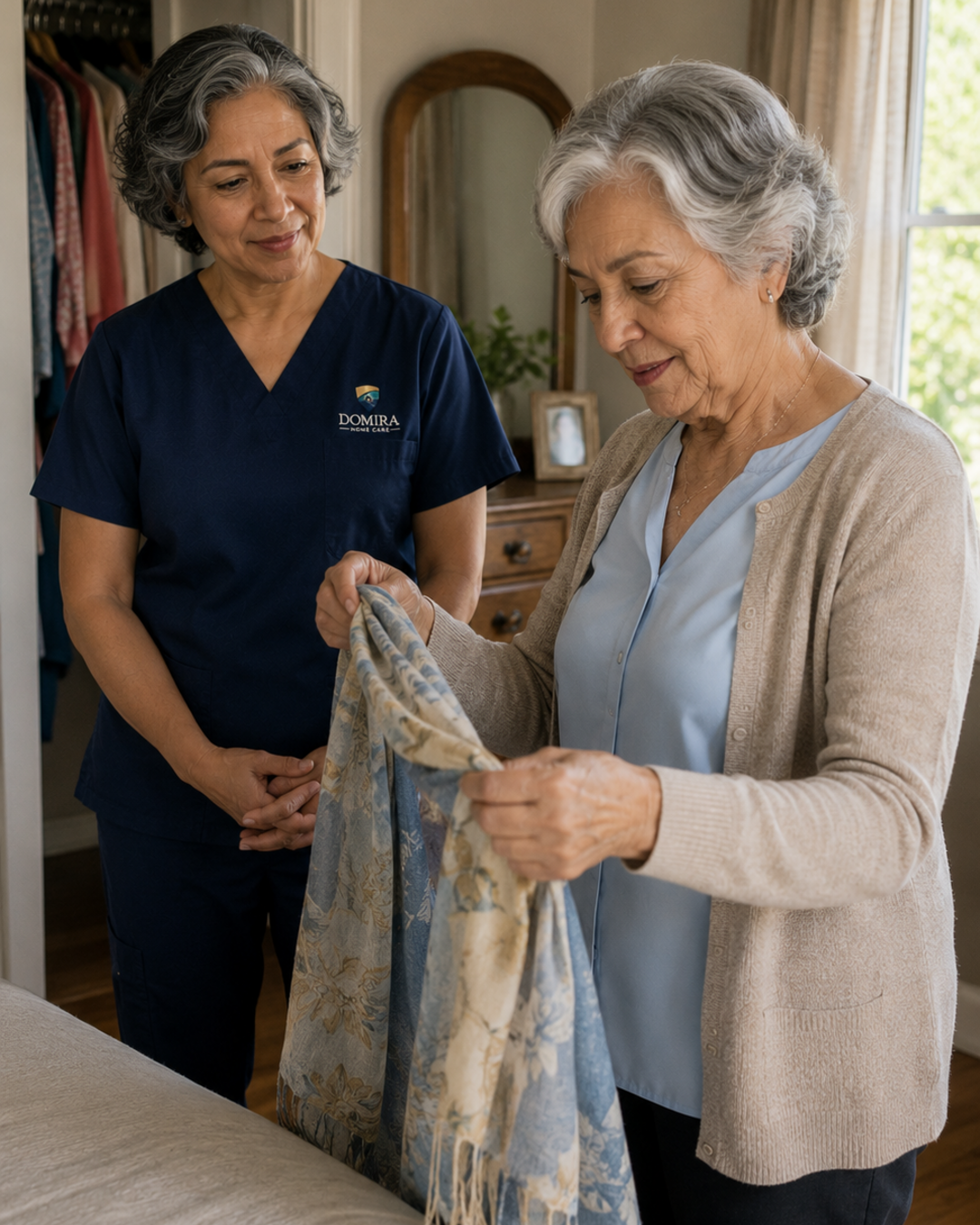
Older woman holds a patterned scarf while a caregiver stands beside her near a wardrobe.
Identify the tasks that have changedRather than asking whether someone “needs a caregiver,” list the tasks that have changed. Are buttons, zippers, bathing, opening containers, carrying groceries, making the bed or moving around the house harder than they used to be?
Ask how help should be offeredAsk how the individual prefers help to be offered. Taking over without asking can make support feel intrusive even when the caregiver is trying to be efficient.
Keep clinical decisions with professionalsPain, swelling, sudden loss of function or other symptoms should be reviewed by qualified healthcare professionals. A home caregiver cannot diagnose arthritis-related changes or recommend medication and treatment.

Arthritis can affect ordinary household routines in different ways. Someone may manage conversation, decisions and most of the day independently but struggle with fastening clothes, preparing meals or handling laundry. The purpose of non-medical home care is not to treat arthritis. It is to help with daily activities that have become difficult while respecting the person's preferences and the licensed care team's recommendations.

Identify where assistance would matter

Rather than asking whether someone “needs a caregiver,” list the tasks that have changed. Are buttons, zippers, bathing, opening containers, carrying groceries, making the bed or moving around the house harder than they used to be? Does the person have a preferred time of day when certain activities are more manageable?

Pain, swelling, sudden loss of function or other symptoms should be reviewed by qualified healthcare professionals. A home caregiver cannot diagnose arthritis-related changes or recommend medication and treatment.

Preserve independence during personal care

Dressing and grooming can be frustrating when hands or joints are uncomfortable. A caregiver may assist with appropriate parts of the task, prepare supplies, and allow more time for the person to do what they can. Bathing and toileting support may also be included when the care plan calls for hands-on assistance.

Ask how the individual prefers help to be offered. Taking over without asking can make support feel intrusive even when the caregiver is trying to be efficient.

Reduce the household workload

Meal preparation, dishes, light housekeeping, laundry, changing linens, groceries, and errands often account for a substantial share of physical effort. Organizing several tasks into a consistent shift can make the home easier to manage and leave more time for activities the person values.

The caregiver follows the non-medical care plan. Specialized adaptive devices or clinical exercise programs should be selected and explained by appropriate professionals.

Plan for mobility and appointments

If walking, transfers or getting in and out of a vehicle have become difficult, the family should discuss the person's capabilities and precautions with the relevant licensed team. Caregiver assistance must fit training, the care plan and the actual home environment.

Transportation and appointment accompaniment can be part of non-medical support when appropriate. Some people need help preparing to leave the house; others need a steady companion throughout the outing.

Fit the schedule to the person's routine

Care needs may be concentrated around mornings, bathing days, shopping days, or periods when family is unavailable. An assessment helps identify which tasks require assistance and how long a visit should realistically be. A caregiver matched for temperament, experience and schedule can become familiar with the person's preferred way of doing things.

A new decline or change in activity tolerance should prompt discussion with the healthcare team rather than simply increasing assistance without assessment.

Put practical support around the clinical plan

Domira provides private-pay, non-medical support for personal care, household tasks, companionship and related routines. It can coordinate appropriately with licensed providers without treating arthritis. Explore Personal Care Assistance, Homemaking Services, and Home Safety Planning. For an individual plan, request a consultation.

Frequently Asked Questions

Common Questions Families Ask

How can we identify where everyday help would be useful with arthritis?

Rather than asking whether someone “needs a caregiver,” list the tasks that have changed. Are buttons, zippers, bathing, opening containers, carrying groceries, making the bed or moving around the house harder than they used to be? Does the person have a preferred time of day when certain activities are more manageable?

Pain, swelling, sudden loss of function or other symptoms should be reviewed by qualified healthcare professionals. A home caregiver cannot diagnose arthritis-related changes or recommend medication and treatment.

How can personal-care assistance preserve independence?

Dressing and grooming can be frustrating when hands or joints are uncomfortable. A caregiver may assist with appropriate parts of the task, prepare supplies, and allow more time for the person to do what they can. Bathing and toileting support may also be included when the care plan calls for hands-on assistance.

Ask how the individual prefers help to be offered. Taking over without asking can make support feel intrusive even when the caregiver is trying to be efficient.

Which household tasks can be included in a care plan?

Meal preparation, dishes, light housekeeping, laundry, changing linens, groceries, and errands often account for a substantial share of physical effort. Organizing several tasks into a consistent shift can make the home easier to manage and leave more time for activities the person values.

The caregiver follows the non-medical care plan. Specialized adaptive devices or clinical exercise programs should be selected and explained by appropriate professionals.

What should we consider when mobility or appointments become difficult?

If walking, transfers or getting in and out of a vehicle have become difficult, the family should discuss the person's capabilities and precautions with the relevant licensed team. Caregiver assistance must fit training, the care plan and the actual home environment.

Transportation and appointment accompaniment can be part of non-medical support when appropriate. Some people need help preparing to leave the house; others need a steady companion throughout the outing.

How should a schedule fit a person’s daily routine?

Care needs may be concentrated around mornings, bathing days, shopping days, or periods when family is unavailable. An assessment helps identify which tasks require assistance and how long a visit should realistically be. A caregiver matched for temperament, experience and schedule can become familiar with the person's preferred way of doing things.

A new decline or change in activity tolerance should prompt discussion with the healthcare team rather than simply increasing assistance without assessment.

Sources and scope

Pain, swelling, sudden loss of function or other symptoms should be reviewed by qualified healthcare professionals. A home caregiver cannot diagnose arthritis-related changes or recommend medication and treatment.

Care Planning

Need Help With Everyday Tasks at Home?

Domira provides private-pay, non-medical support for personal care, household tasks, companionship and related routines. It can coordinate appropriately with licensed providers without treating arthritis.